
by Celine Tay on 14 May 2026
If you’re looking for a unique night experience to do with your curious kids, friends or even by yourself – I’ve got something you probably shouldn’t miss. A rare experience for those interested in the outdoors and the cool critters that live in it.
Herping, in the simplest way to explain, is the act of looking for reptiles or amphibians, usually once the sun is down due to these creatures’ nocturnal behaviour. Yes, that means looking out for snakes, frogs, lizards, and in doing so, you would naturally come across various insects, mammals, fish and others in similar spaces.
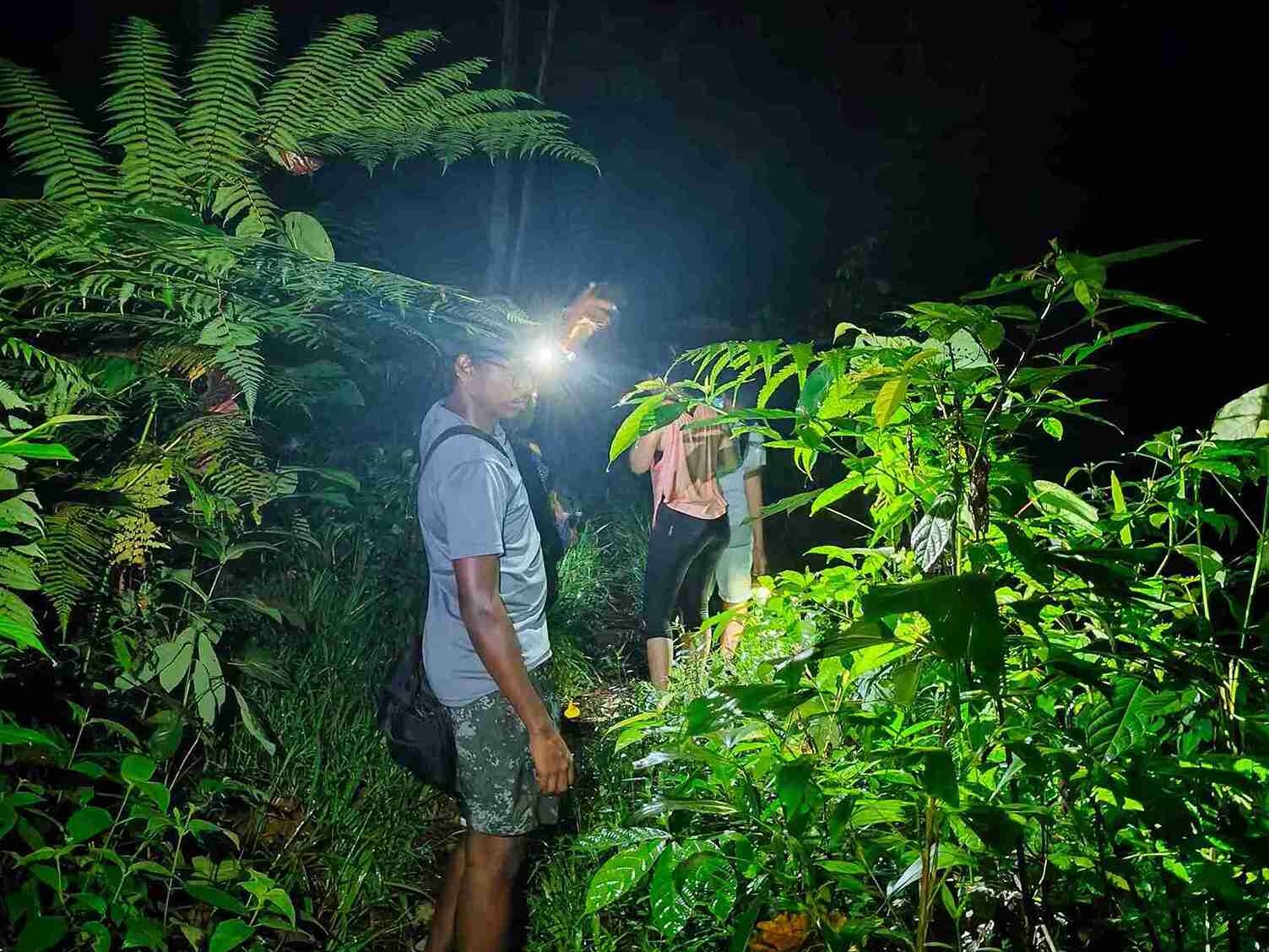
Friends of Bukit Kiara (FOBK), who are an environmental rights NGO with projects based in well…, Bukit Kiara, Kuala Lumpur, runs public walks every month to introduce the delicate biodiversity in our urban surrounded forest, which is one of Kuala Lumpur most significant remaining green lungs. As of recent years, rapid development has threatened the rich biodiversity of this forest, urging the organisation to put in more crucial efforts to protect what is left.
Lamprigera larvae – the scientific name of one out of NINE species of fireflies are found in this forest cum recreational park. The Glow Campaign was launched to educate locals about the fragile species that live in our backyard forest. One where many locals take time off their day to walk, hike, or climb in a green space a.k.a. touch grass.
To learn about the rich flora and fauna – FOBK hosts 3 types of public walks:
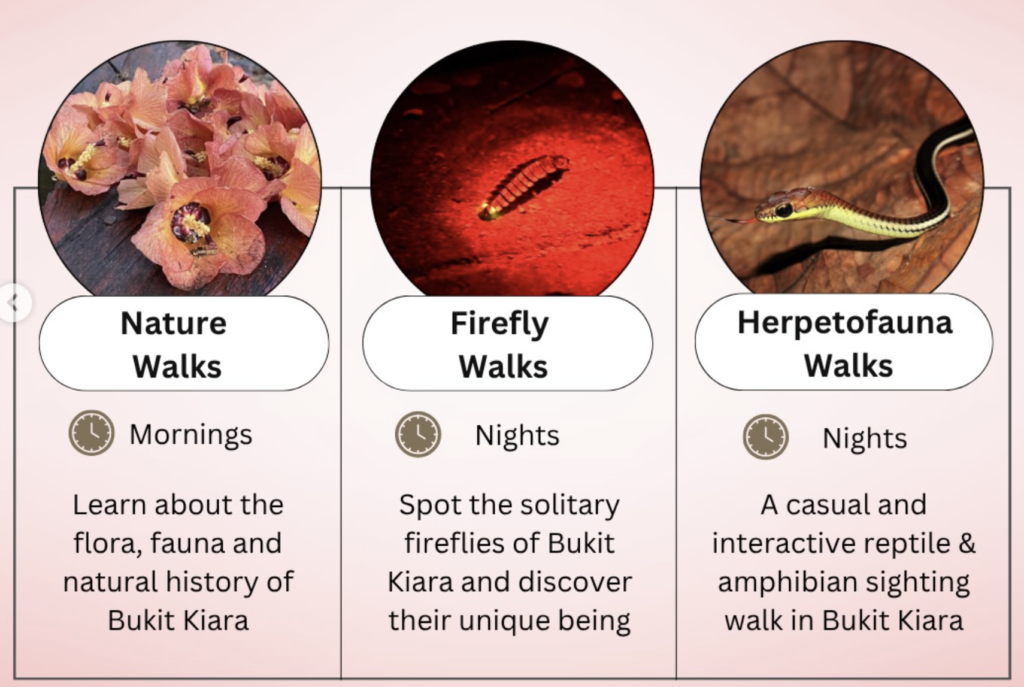
I’ve been on 3 Herpetofauna Walks by FOBK over the years, and each session has always been eye-opening, be it about the work they do, the types of wildlife they’ve studied in Bukit Kiara or of course, the wildlife we get to spot during the walks! These walks are beginner-friendly and open to children to join as well. Most of the walk is done on a tarmac road, with a small portion done in mostly flat jungle terrain.
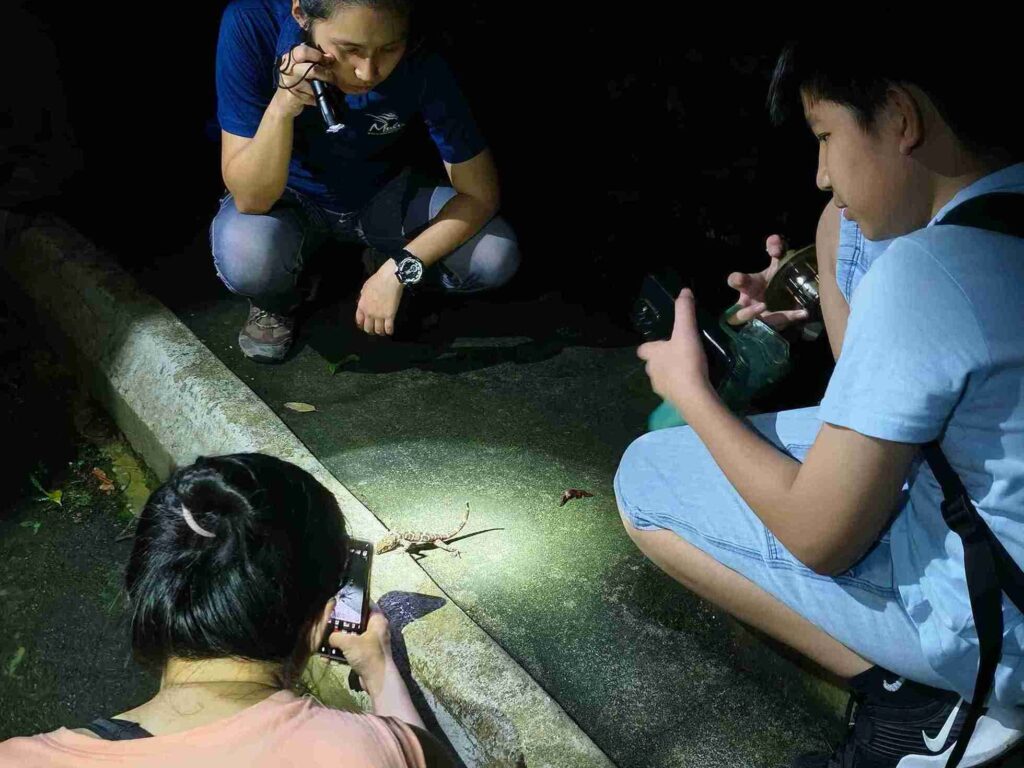
If you’re wondering if we do bump into snakes in a forest like this – you may be in for a treat!
Scroll down to see how you can sign up for their public walks.
List of animals spotted over 2 walks
Fireflies
- Lamprigera larvae
- Colophotia adult
Snakes
- Blood Python (Python brongersmai)
- Haas’ Bronzeback (Dendrelaphis haasi)
- Asian Vine Snake (Ahaetulla prasina)
- Triangle Keelback (Xenochrophis trianguligerus)
Frogs
- Dark-sided narrow-mouthed frog (Microhyla heymonsi)
- Mukhlesur’s narrow-mouthed frog (Microhyla mukhlesuri)
- Spotted Litter Frog (Leptobrachium hendricksoni)
- White-lipped frog (Chalcorana labialis)
- Banded Bullfrog (Kaloula pulchra)
- Four-lined Tree Frog (Polypedates leucomystax)
- Corrugated frog (Limnonectes deinodon)
- Ornate Narrow-mouthed Frog (Microhyla ornata)
Lizards
- Earless Agamid (aphaniotis fusca)
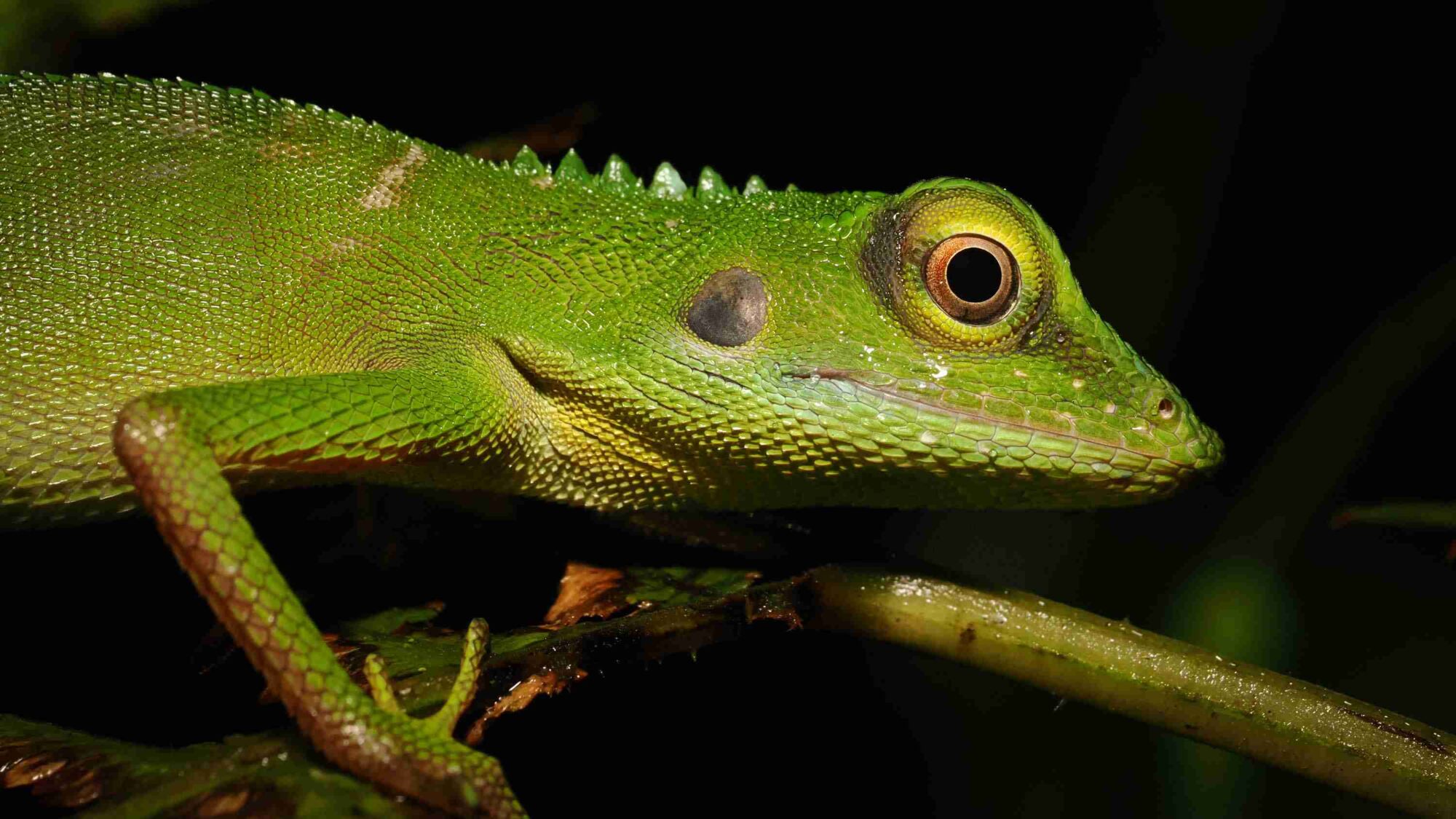
- Green Crested Lizard (Bronchocela cristatella)
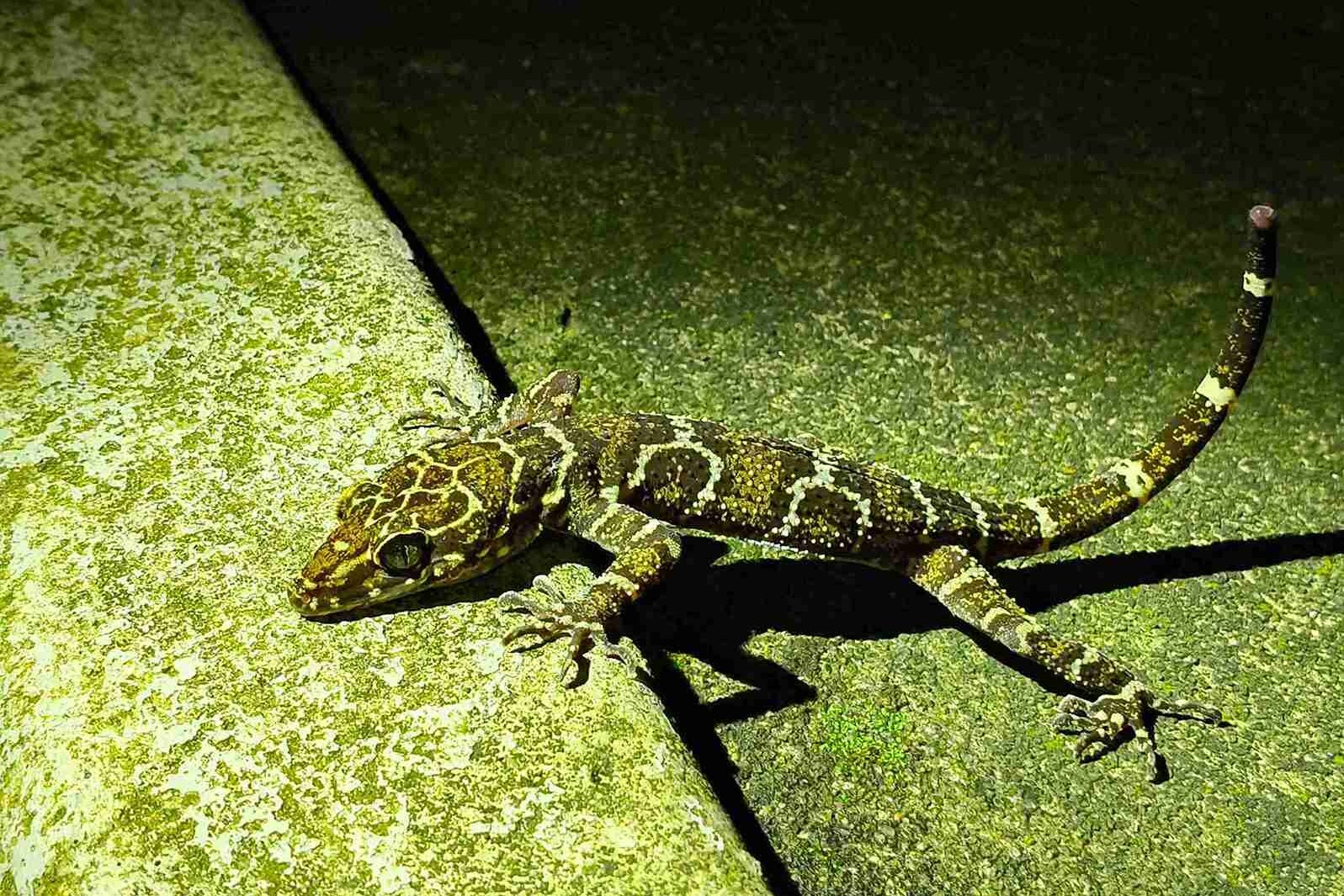
- Marbled Bent-toe Gecko (Crytodactylus quadrivirgatus)
Peninsula Bent Toed Gecko (Cyrtodactylus peninsularis)
Turtles
- Malayan Softshell Turtle (Dogania subplana)
- Spiny Hill Turtle (heosemys spinosa)
Mammals
- Long-tailed Macaque (Macaca fascicularis)
- Asian Palm Civet (Paradoxurus musangus)
Others
- Stick insect (Phasmid)
- Asian Forest Scorpion (Heterometrus spinifer)
- Dwarf Wood Scorpion (Liocheles australasiae)
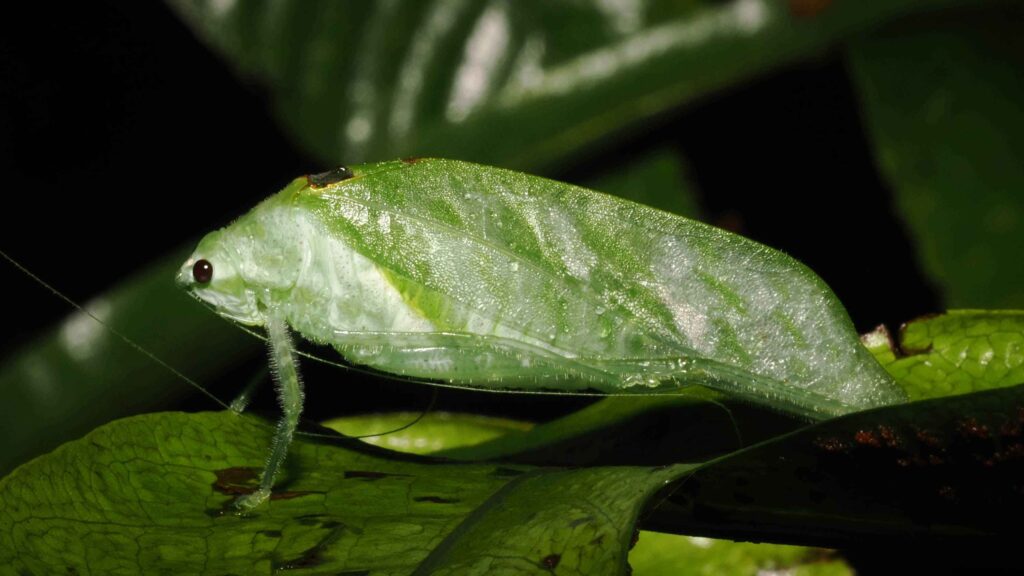
- Katydid (family: Tettigoniidae)
- Maculated Freshwater Crab (Parathelphusa maculata)
- Malayan Grey-bearded Shrimp (Macrobrachium malayanum)
- Huntsmen Spider (Family: Sparassidae)
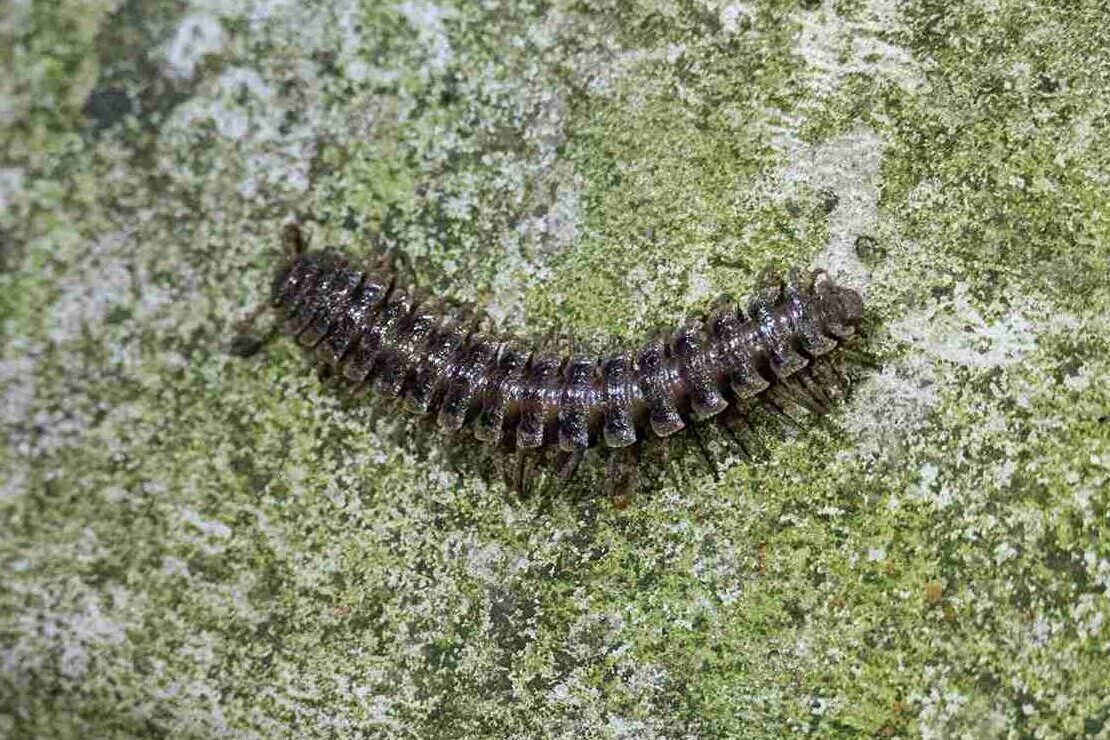
- Trilobite beetle (Platerodrilus)
- Plant Hopper Nymph (Order: Hemiptera)
- Snakehead fish (Channa sp.)
- Yellow-vented bulbul (Pycnonotus goiavier)
Grab your headlamps, and I’ll show you what we found >
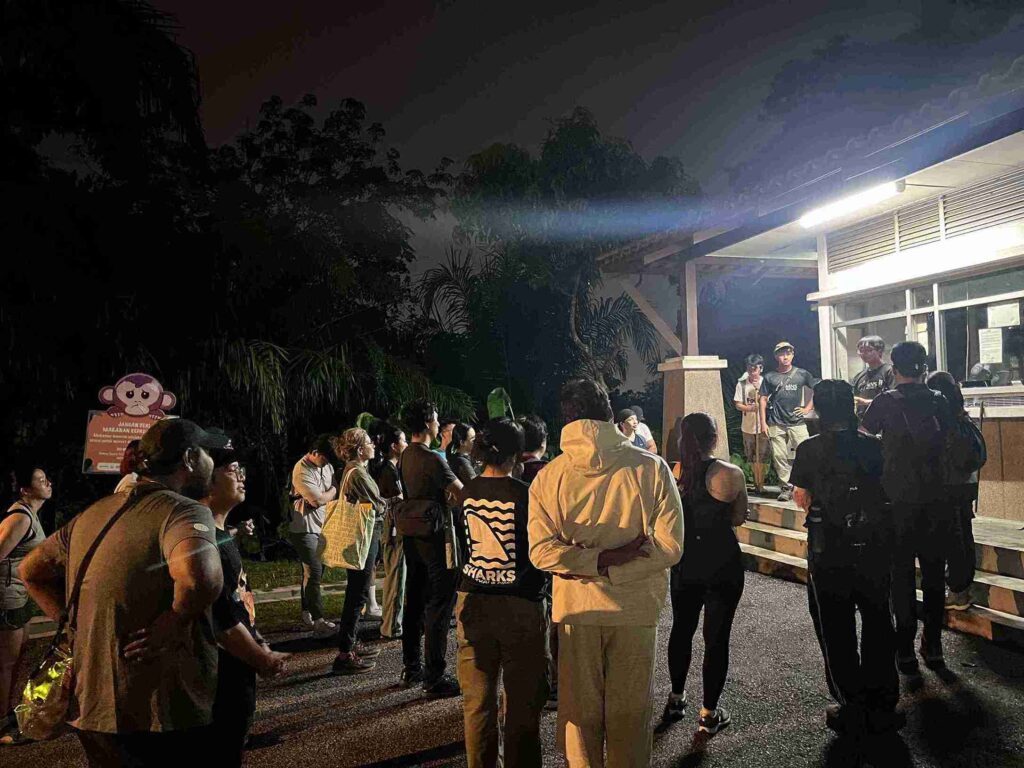
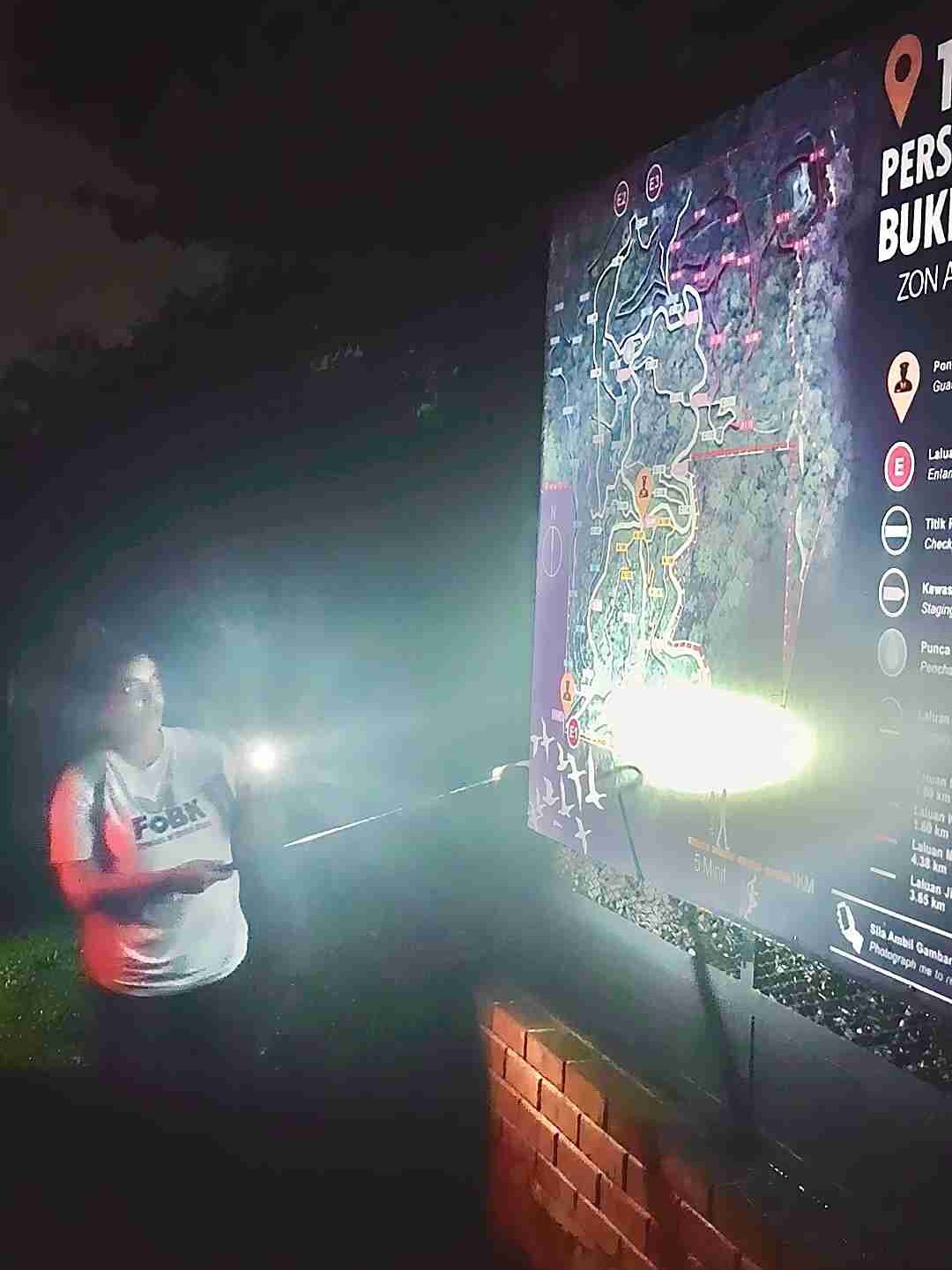
Our walk typically begins with an introduction to the history of Bukit Kiara and why Friends of Bukit Kiara was formed. Harleen, our lead guide explains – only a portion of the forest is now left and yet, further development of residential buildings and whatnot continues to encroach on the land. In recent years, the fireflies sightings have reduced significantly as the area where they used to breed and roam around is now side by side, against a concrete wall built by a fairly new residential building developer.
As we proceed through the walk, our guides pointed out these fireflies and their larvaes – their large sizes may surprise you as it did with us. Some were almost the length of my palm. The little glow on their back is the only way to notice them from a certain distance at night.
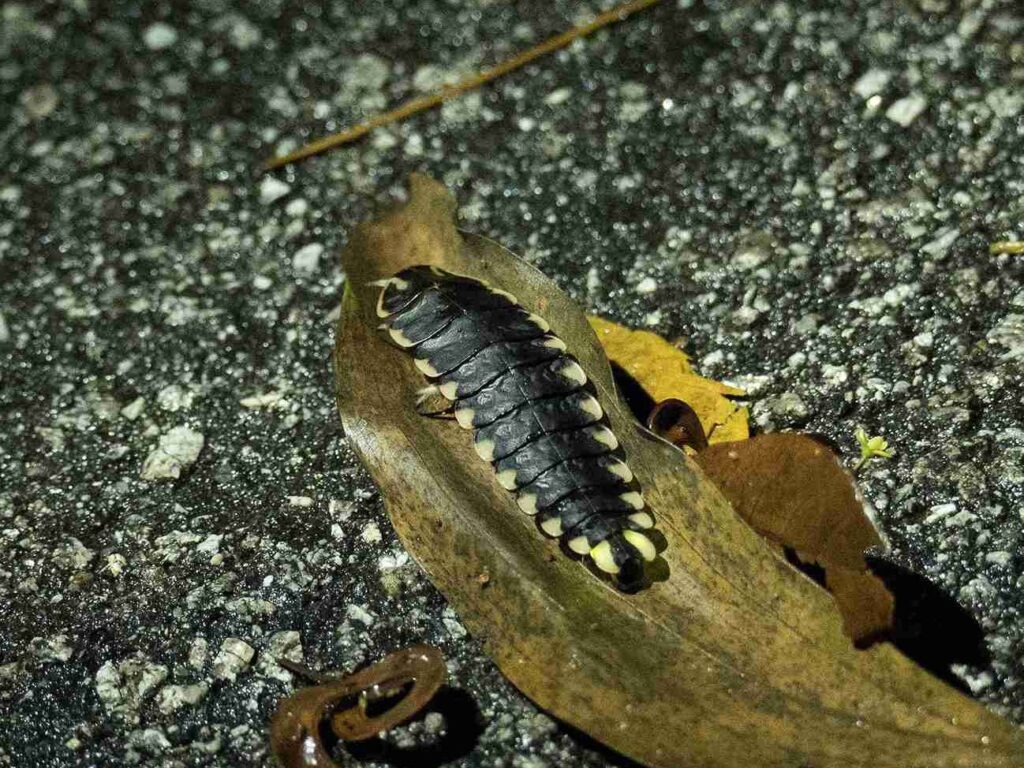
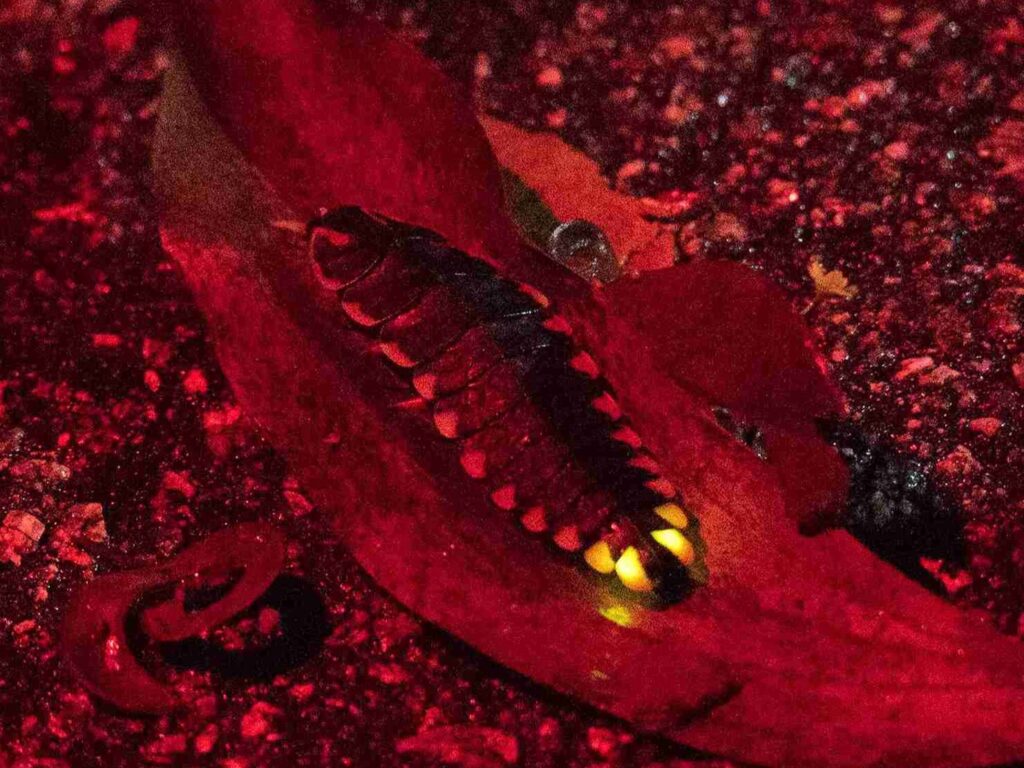
Harleen shares that a rare species of fireflies has been found here – and it is one that has not been seen in over a hundred years! More info on how special this discovery is can be found here: The Glow Campaign.
The walk continues on the tarmac road as we spot sleeping long-tailed macaques by their silhouettes against the not-so-dark night sky, and as we walk, we learn to take it slow and notice the bunch of critters along the way that we would have conveniently missed out on.
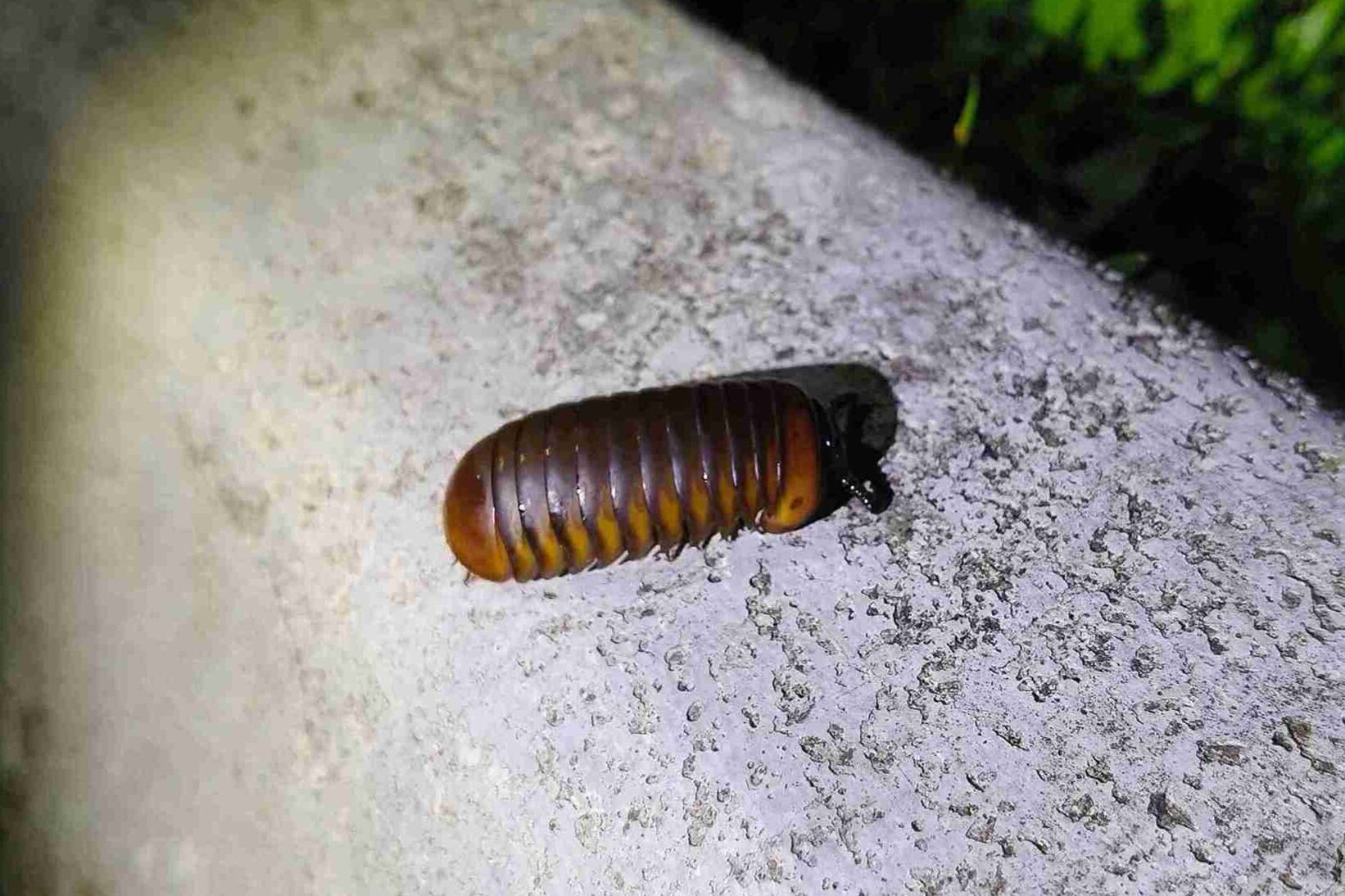
Look down – notice the little night crawlers that are dwelling just beside your feet and hopefully not underneath them.
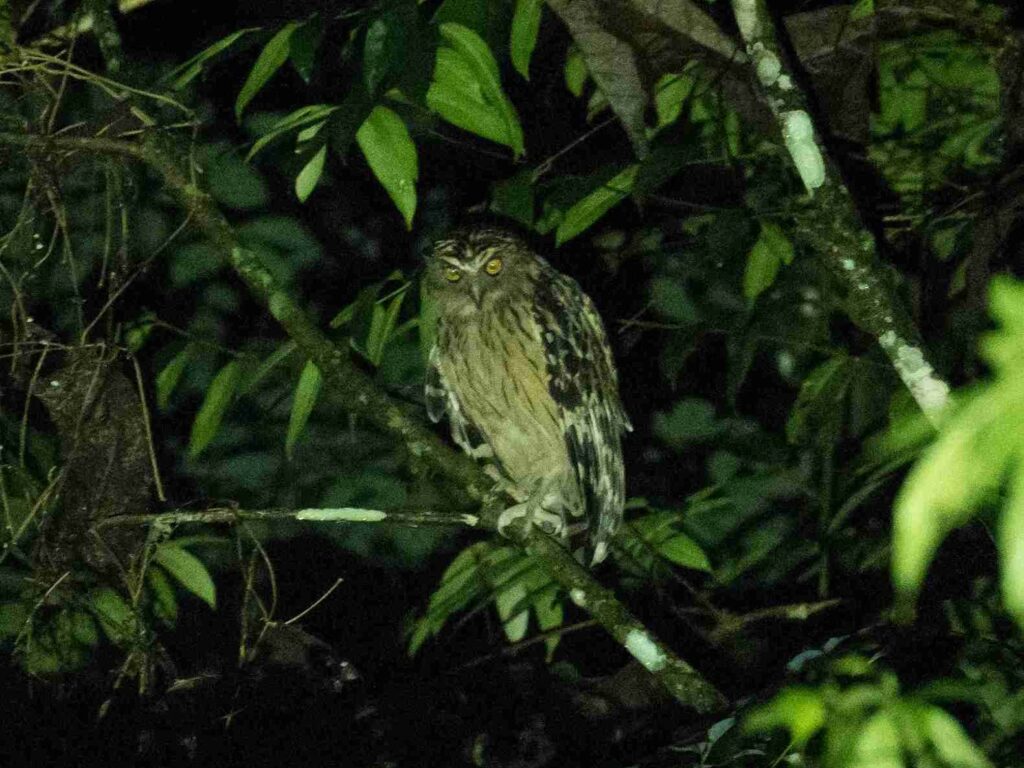
Look up – sleeping birds cuddling with one another beneath the lush tree leaves.
Now look further up – an Asian Palm Civet (Paradoxurus musangus)! Watching us as intently, amongst the branches of tall trees as we watched it.
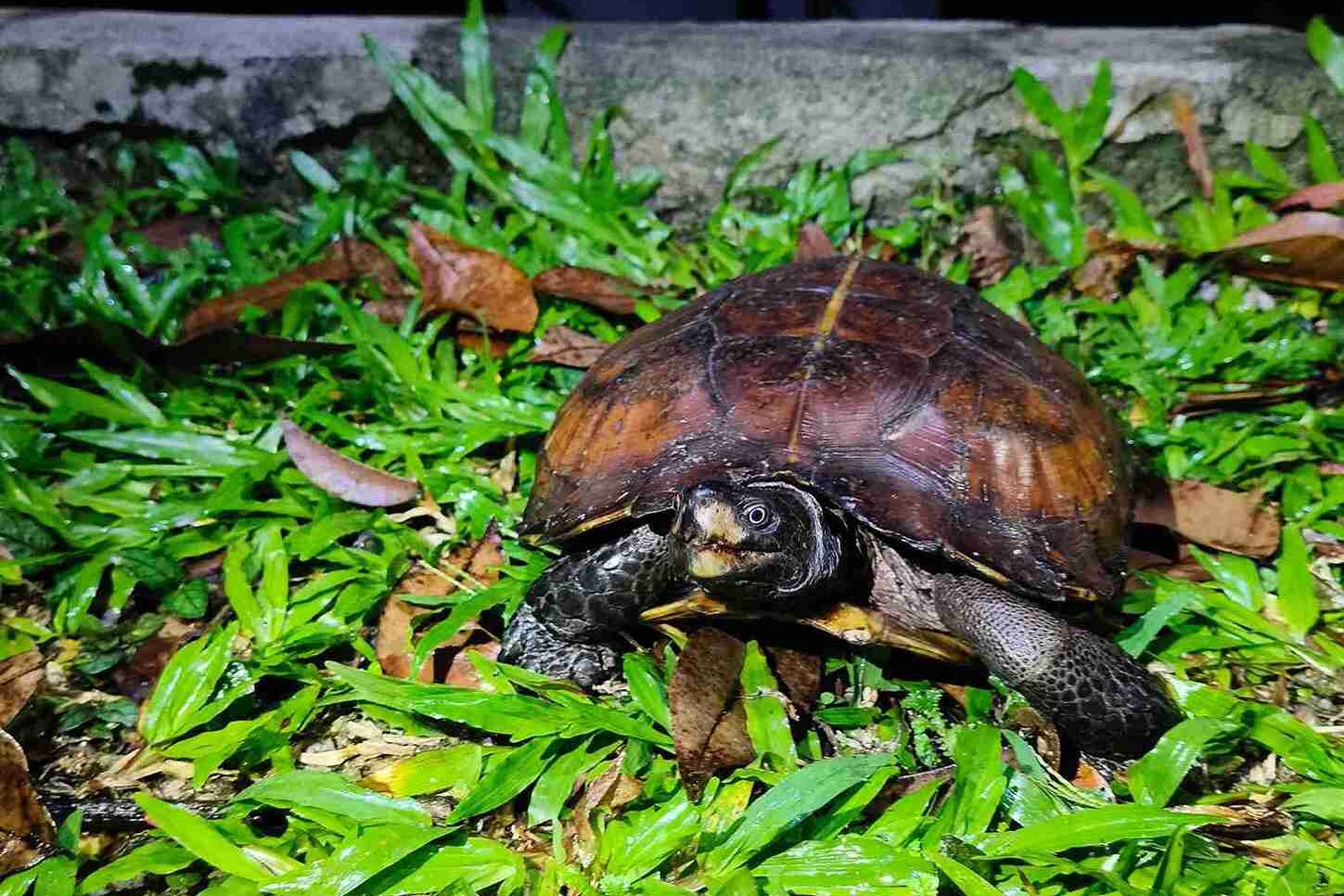
Look left – right on the curbside, a Spiny Hill Turtle (heosemys spinosa) – but he’s not in the mood to greet his late visitors today.
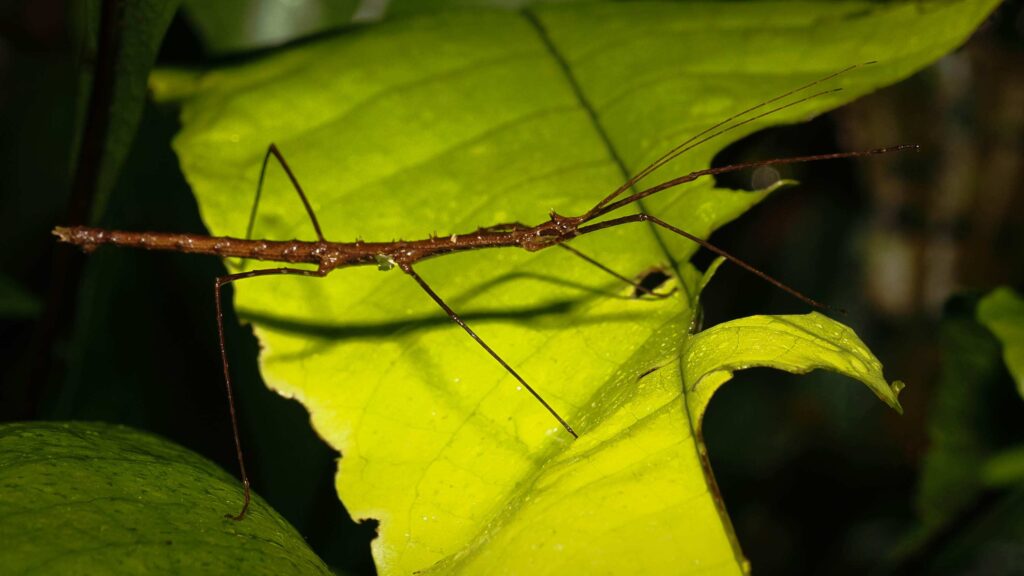
Look right – on the leafy green trees, a stick insect (Phasmid).
One thing to get used to on a herp walk is the multiple stops in between the walk – to observe, notice and spot wild critters that you wouldn’t have seen on your usual walks in the jungle. While still on the tarmac road, we found several species of frogs – many that are small yet so distinctively different from one another, when you take a closer look.
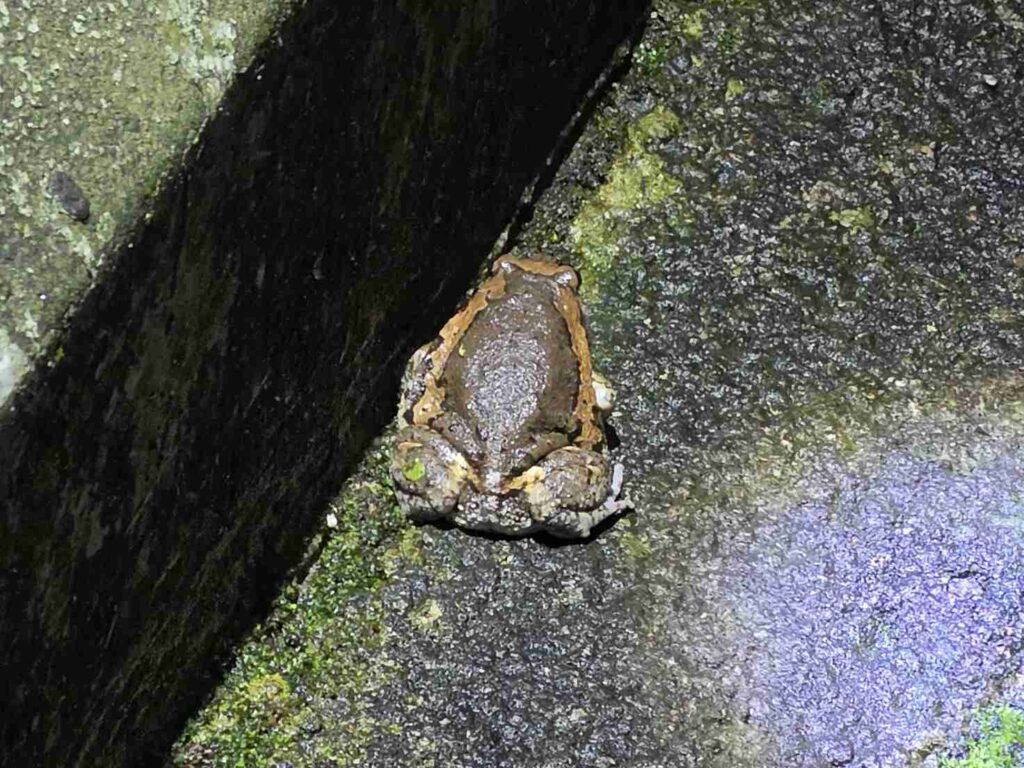
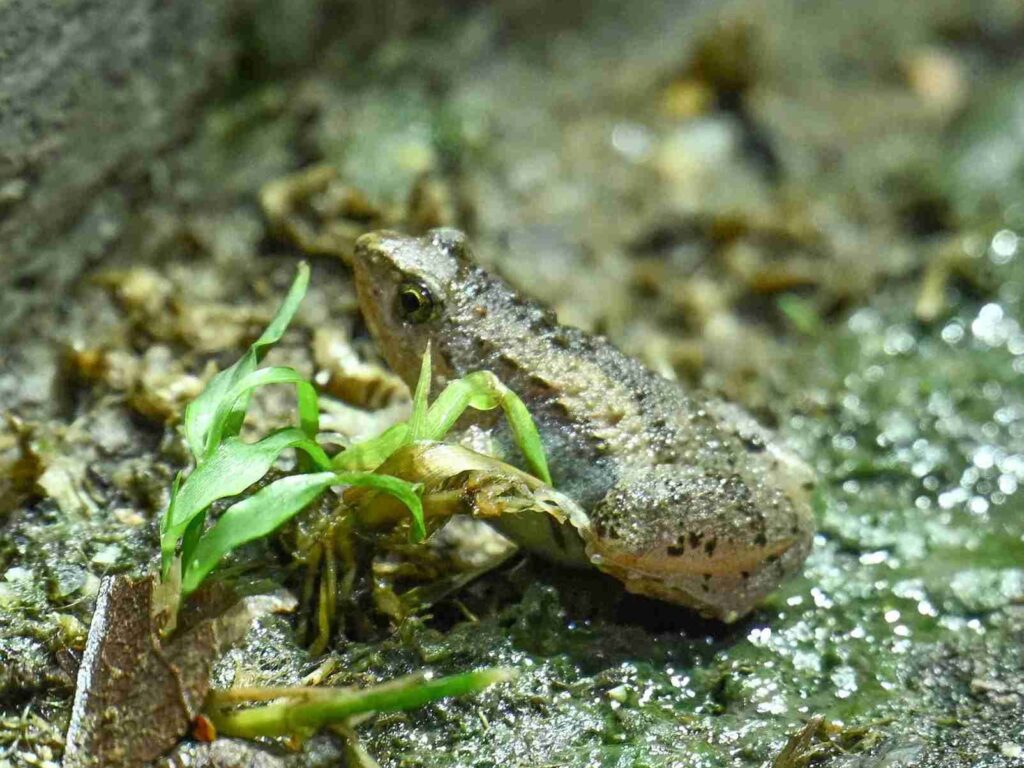
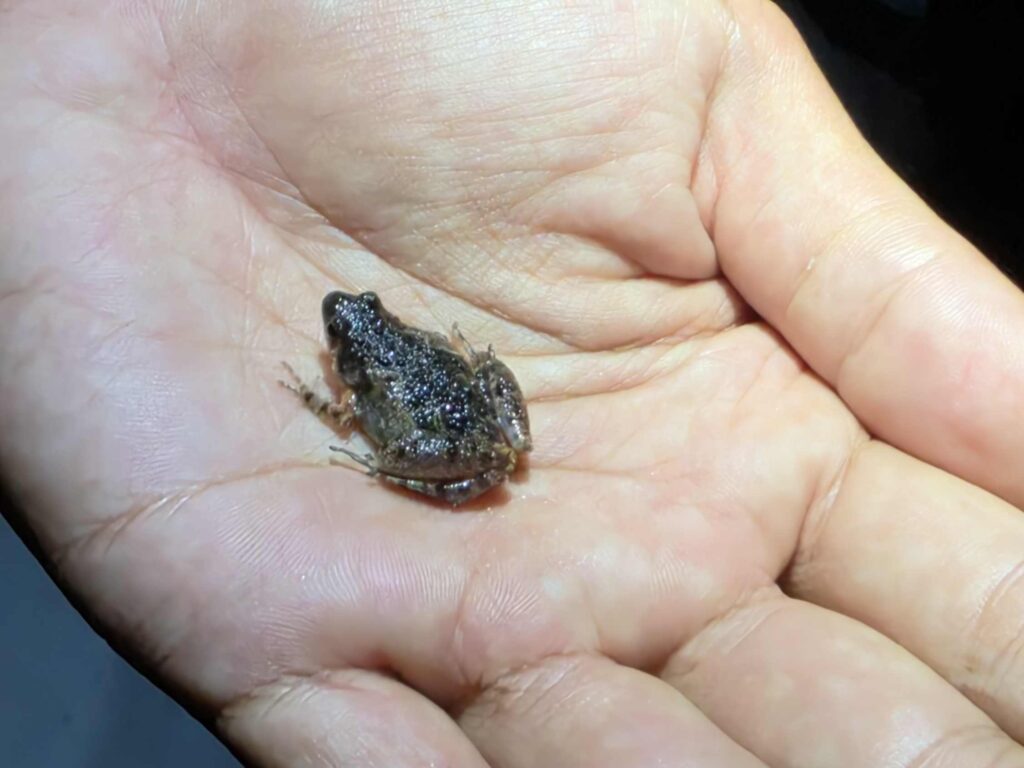
And just when you thought that was many enough, we stepped into the jungle terrains via Keladi Trail, and well – found more frogs and lizards!
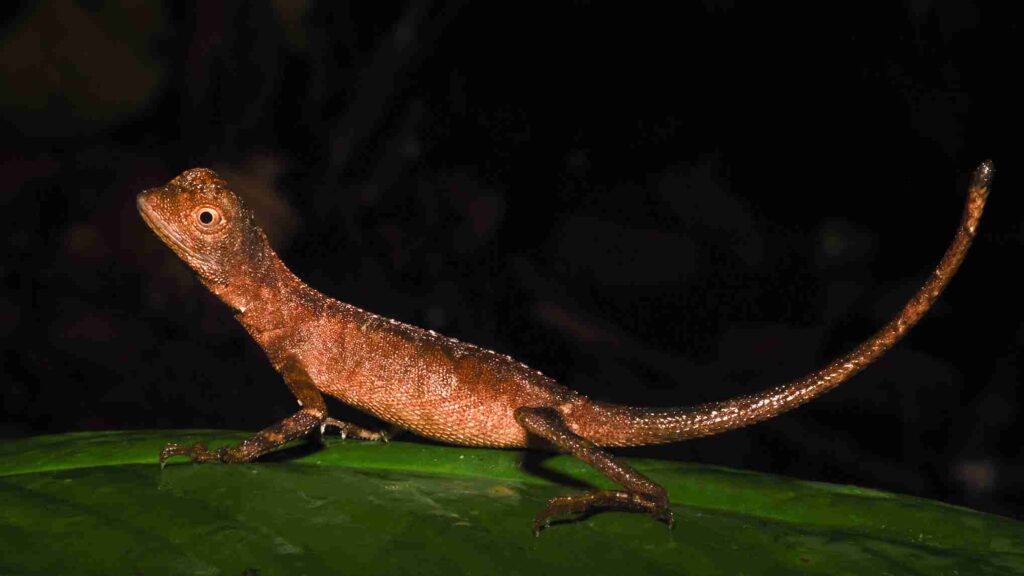
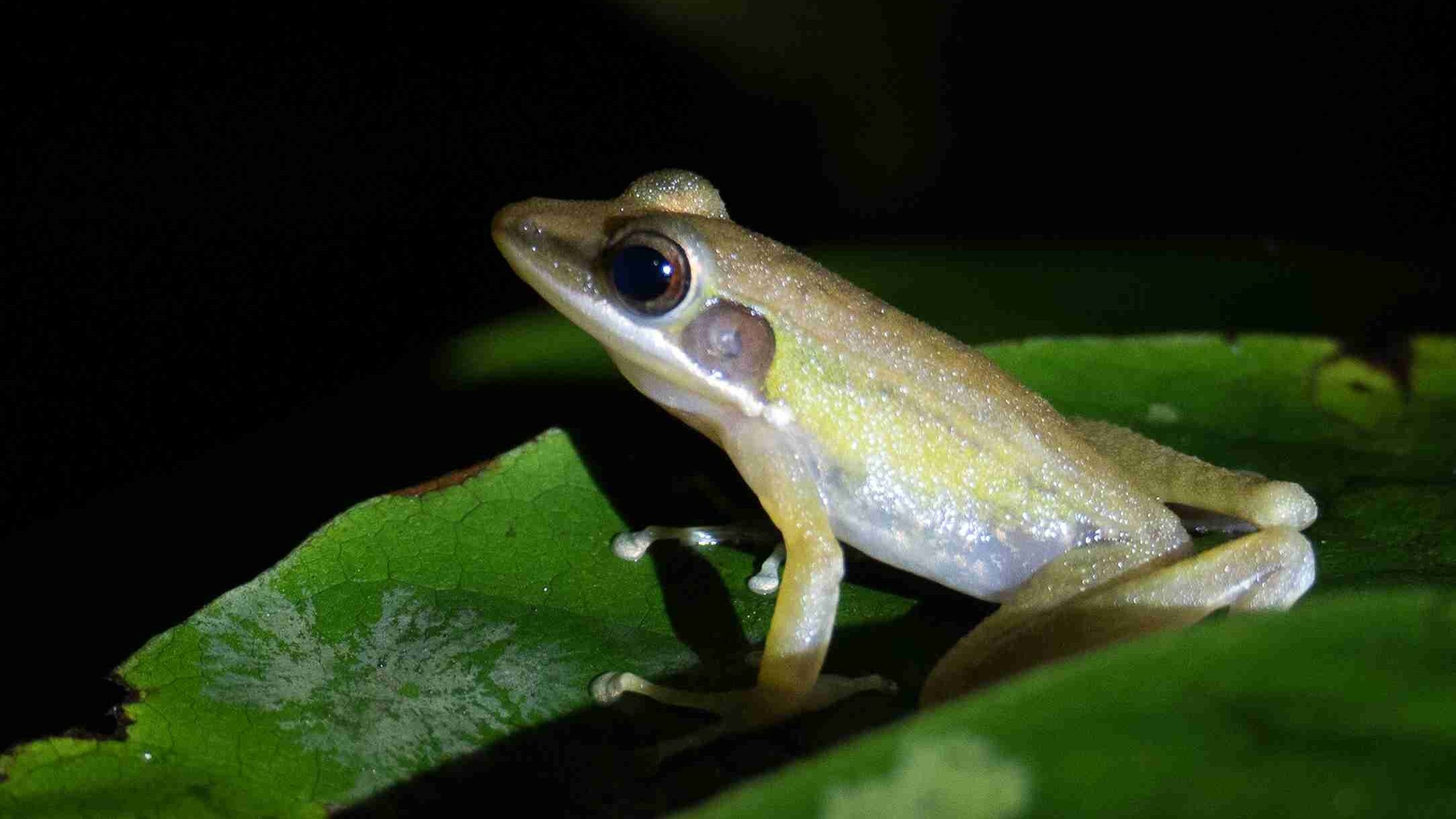
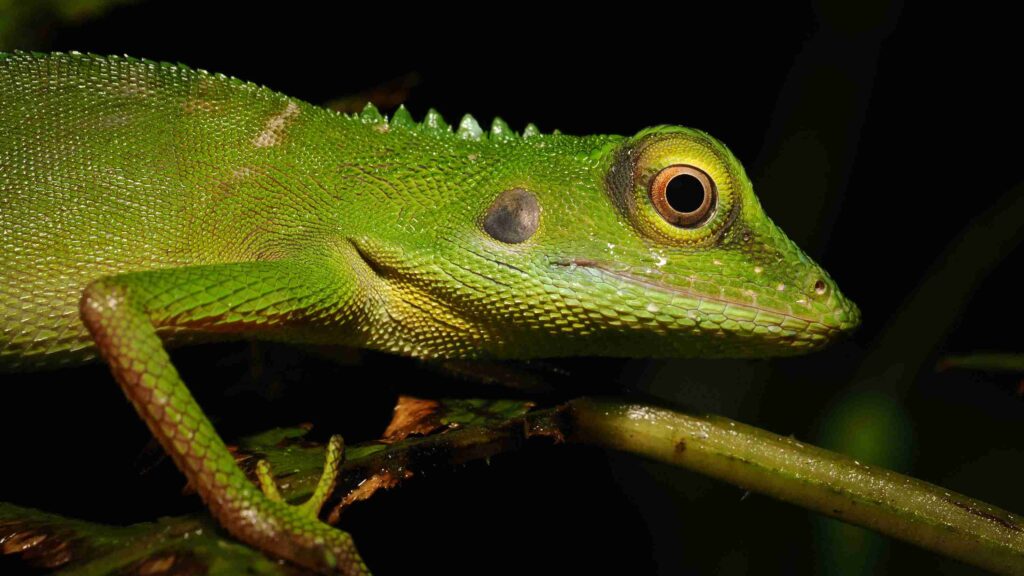
A unique species I quite enjoyed learning about is the Spotted Litter Frog (Leptobrachium hendricksoni). A fascinating species we’ve seen in many of our hikes all around the peninsula, and yet, one I still will coo over thanks to its peculiar features.
The spotted litter frog is named after where it is always spotted around: leaf litter. It is a forest-floor dwelling species easily camouflaged among the green, brown, orange and greys of fallen leaves.
Their eyes are a bright shade of orange/red.
Their calls surround us in the jungle and their gigantic tadpoles are all over the stream.
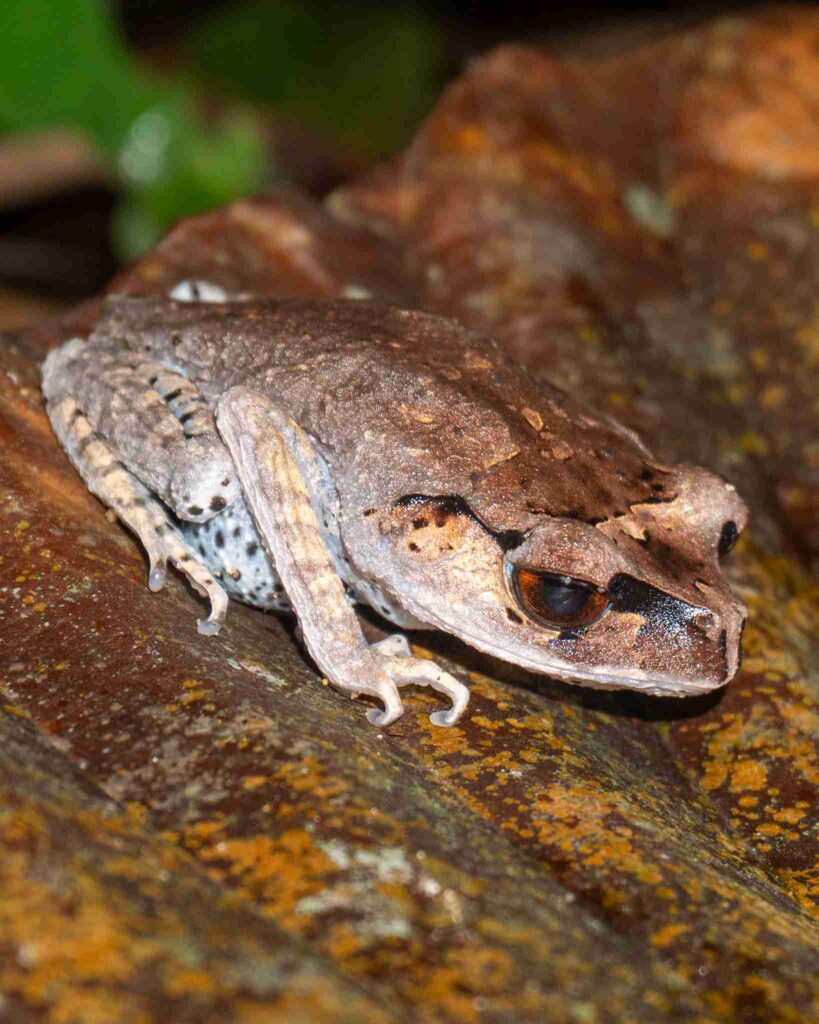
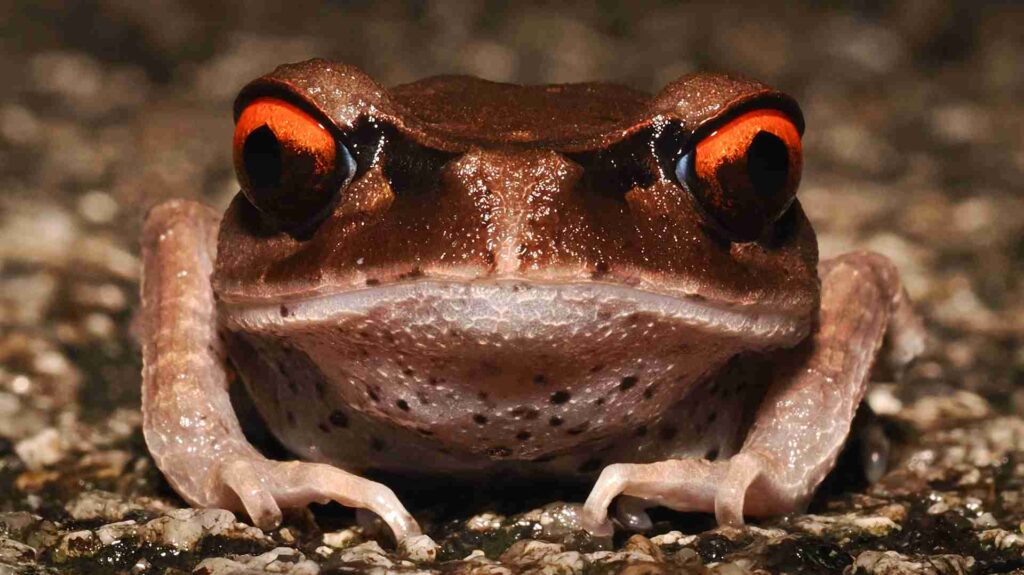
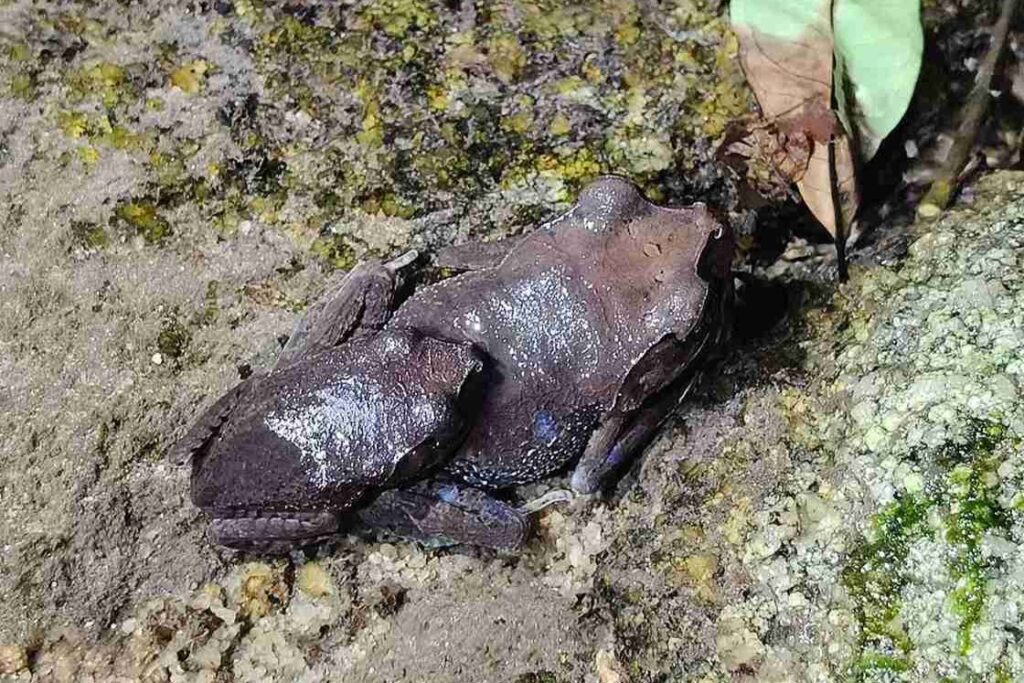
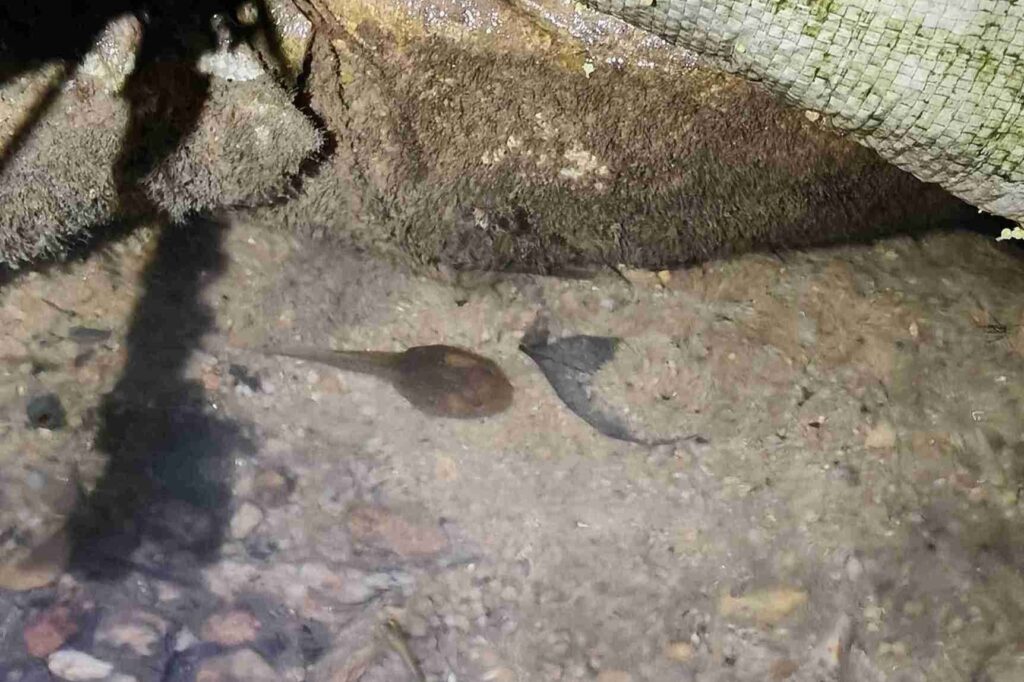
What’s so peculiar, you might think?
When feeling threatened, these frogs do not hop away like many other species do. Instead, it crouches down till it is parallel to the ground, essentially becoming a pancake. Upon touching them, you would quickly deduce one thing: they play dead while maintaining their flat structure even when flipped around.
But how do they move when they’re not in fight or flight mode? Well, they hop- I mean crawl away! To make their little way from point A to B they resort to putting one limb in front of the other instead of jumping. Try searching up for videos of this – it really is a treat to know!
Okay, some of you may be here for one thing – snakes.
Our team have been rather lucky with bumping into pythons on each walk. On our very first visit, a reticulated python (Malayopython reticulatus) in all it’s long bodied glory decided to grace us with a hello while crossing the tarmac road we were on, as we were heading back out.
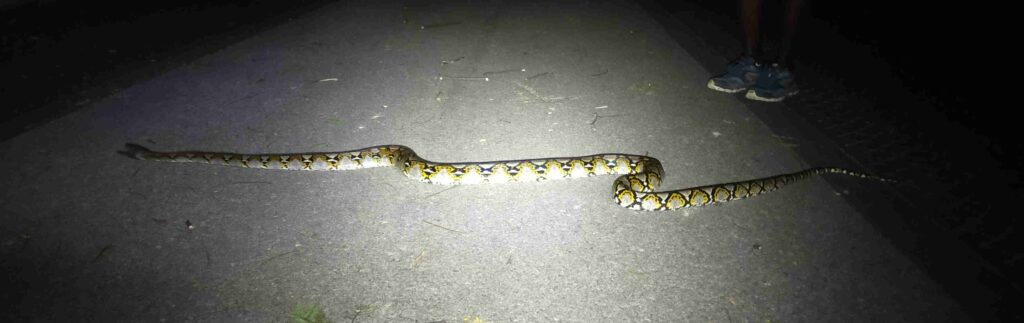
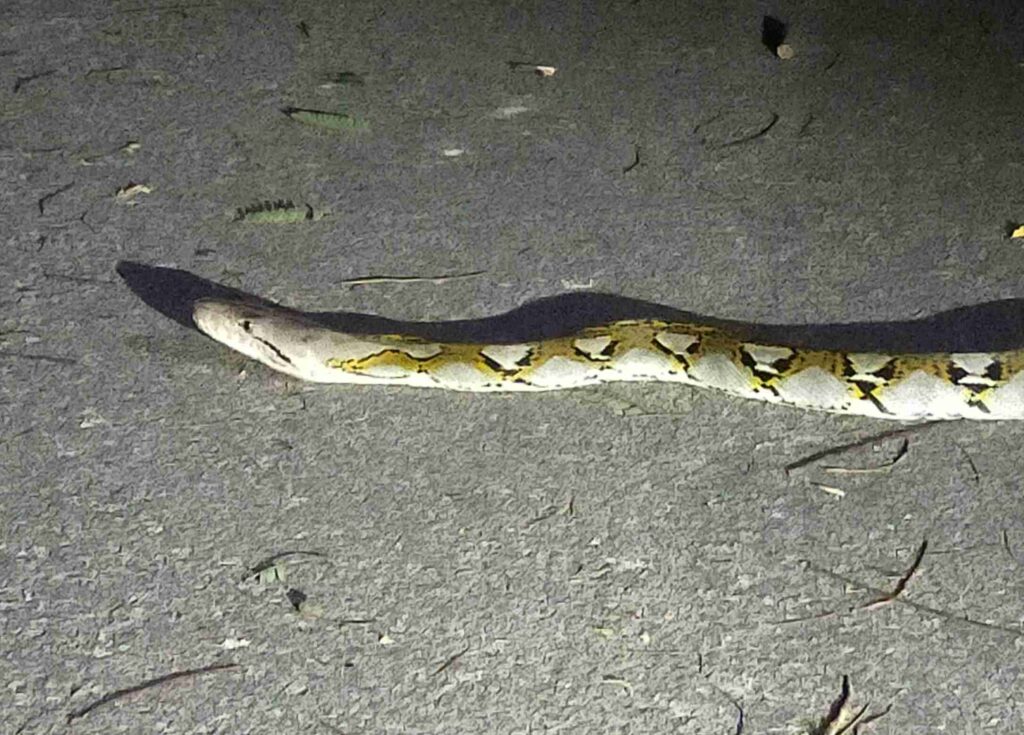
On our second walk in early April this year, just as we were about to head into the jungle trail from the main tarmac road; Marcus (the youngest guide on the team) exclaimed as his sharp eyes spotted something among the leaf litter in the drain. “A blood python!”
“You guys got a rare species. Very lucky to encounter here,” continues Harleen as she ushered us to make way as Marcus carefully brought the snake up with his snake hook/pole. Excited murmurs got louder when we saw it – a body unlike the former reticulated python. This one is visibly short and stubby, not passing the length test in comparison.

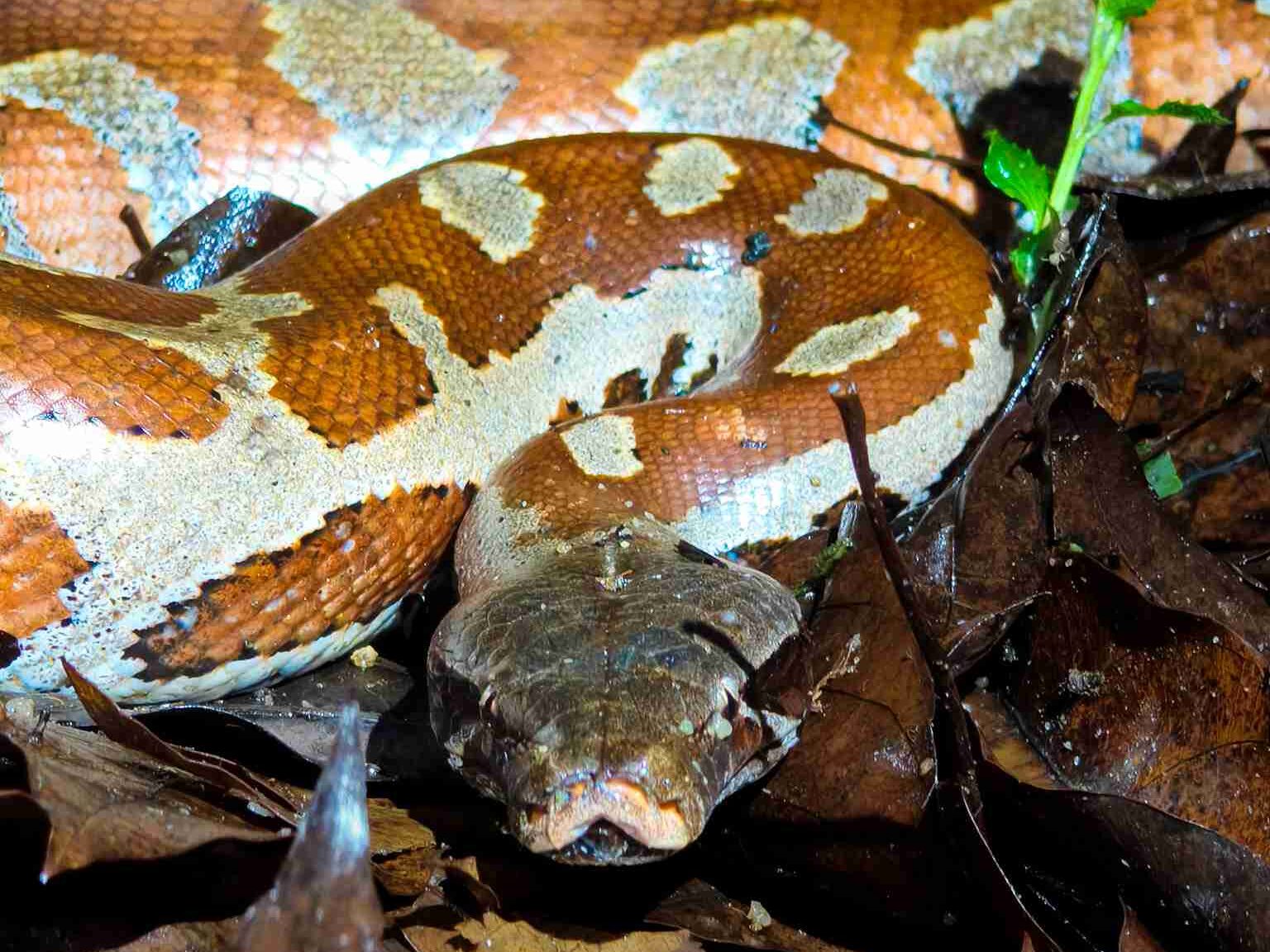
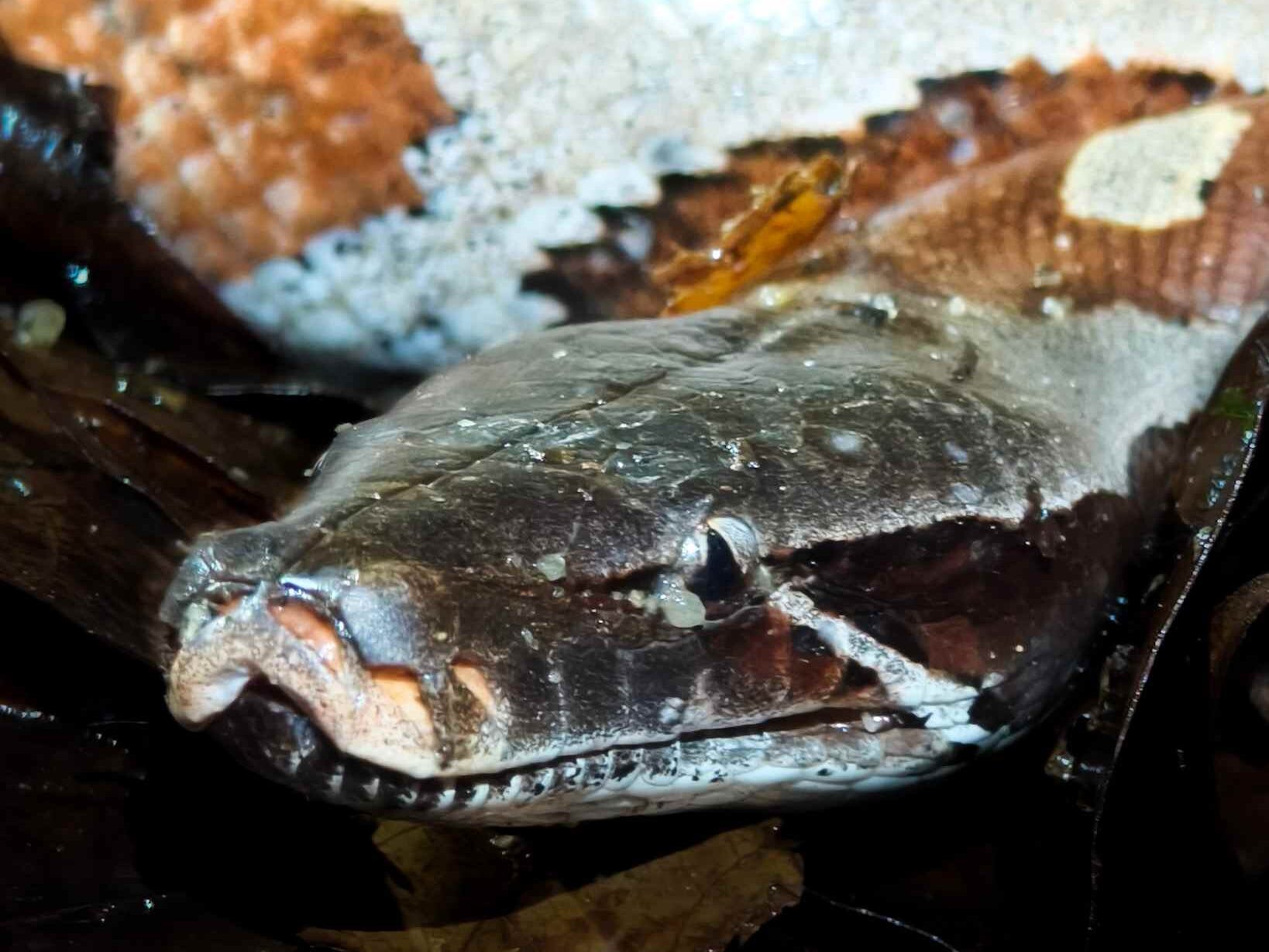
The last sighting of this species in Bukit Kiara was on November 2025 (4 months prior) – the guides believe that sighting was due to the python being washed out of the ground / leaf litter thanks to a heavy rain during the day. They are often found in moist, dark areas: under leaf litter, in deep vegetation, or in burrows on the ground, where they hide and wait for a prey to pass by before striking.
On our third visit – we were in for another surprise! Yet another blood python (a different individual) was spotted before the walk begun.
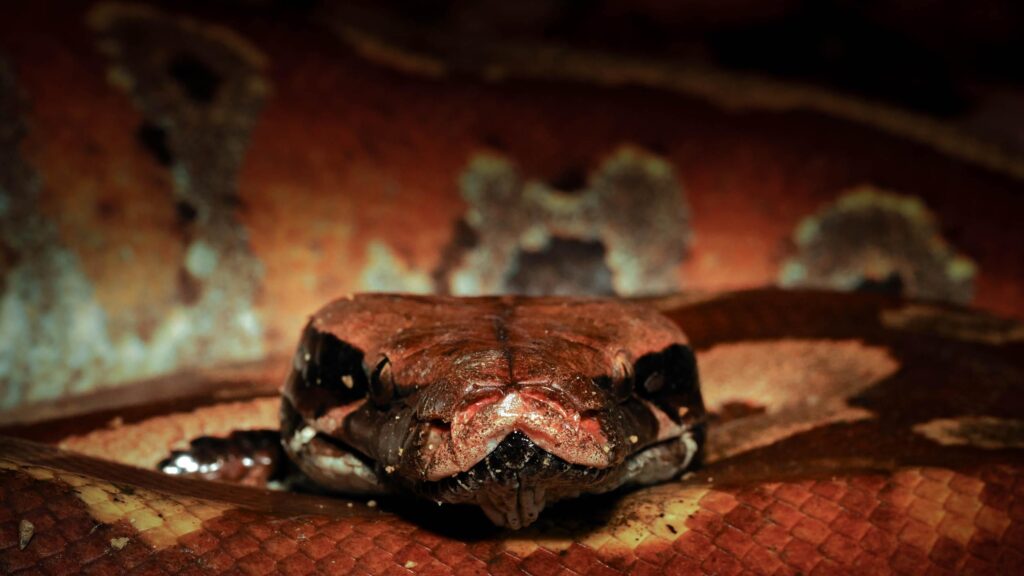
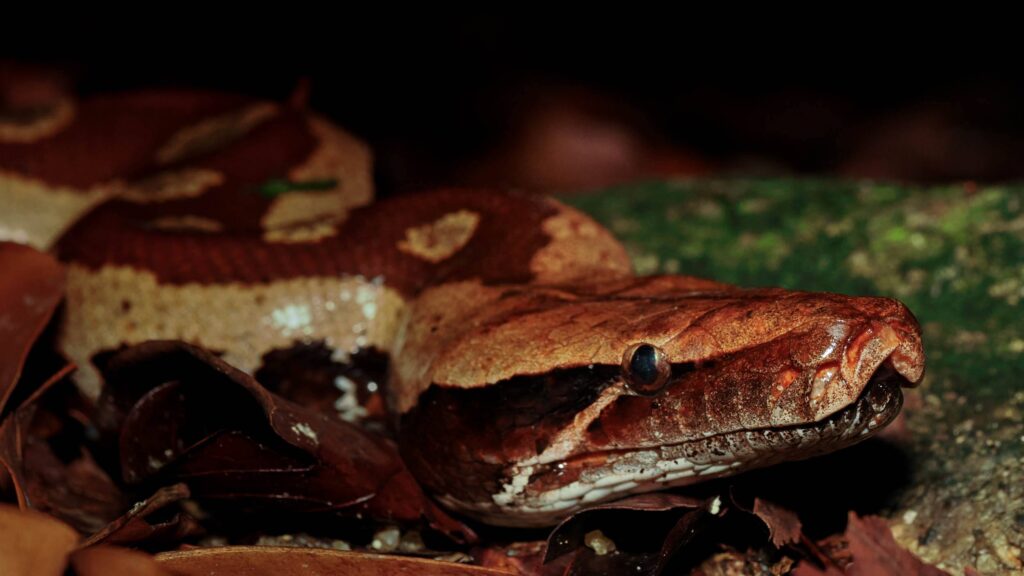
As we thread through the night, our skilled guides (Yik Khan, Harleen, Marcus, Akmal and Ramon) spotted snakes here and there – like it was raining snakes. Here are a couple of cool shots of them:
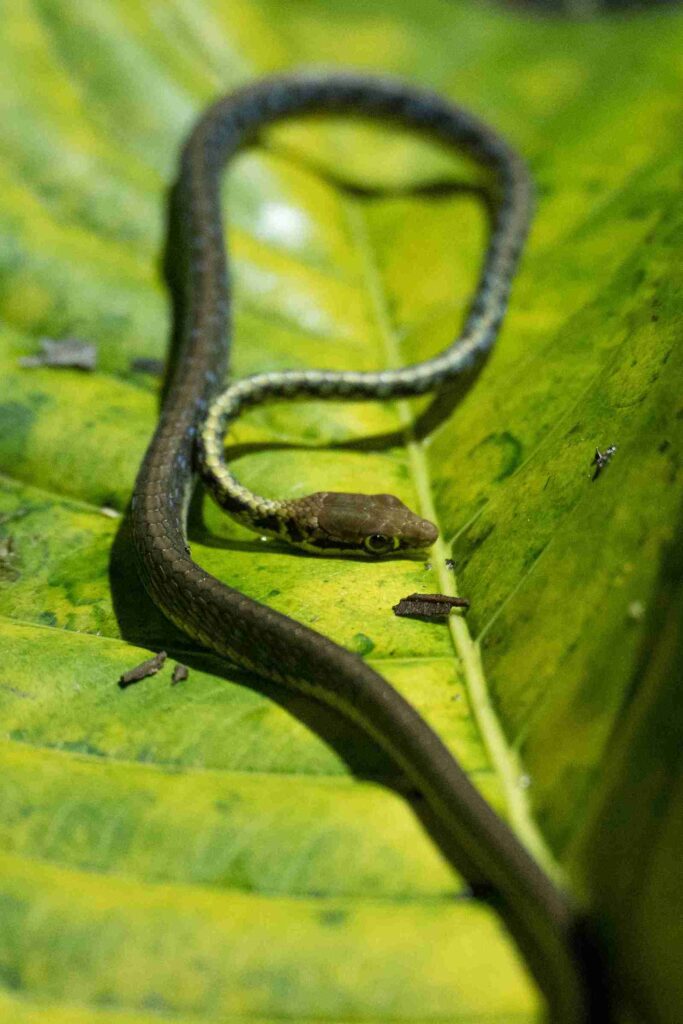
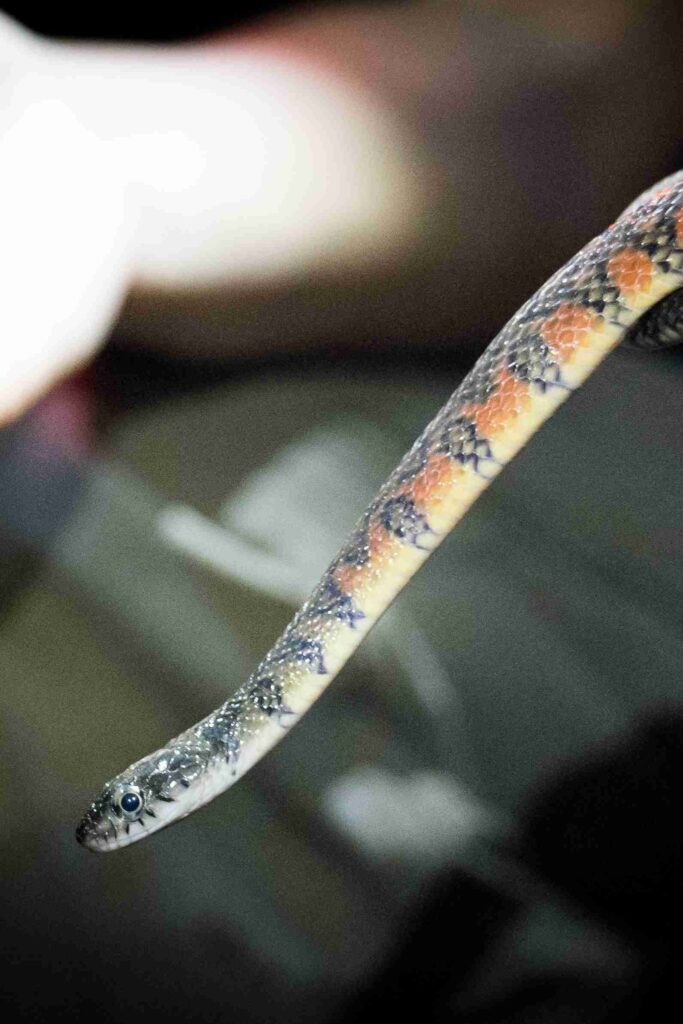
Just before ending the 2 and a half (sometimes 3) hours long walk, we were brought to check out a special wall they call the Scorpion Wall. An ordinary-looking wall that isn’t too ordinary when you look closely.
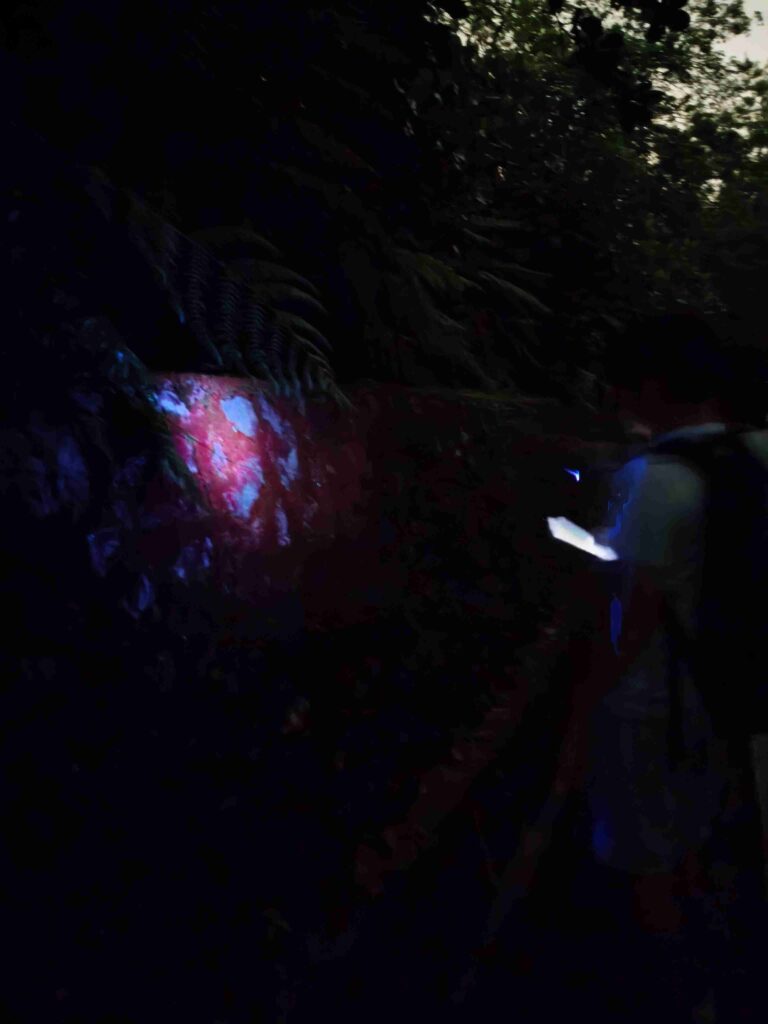
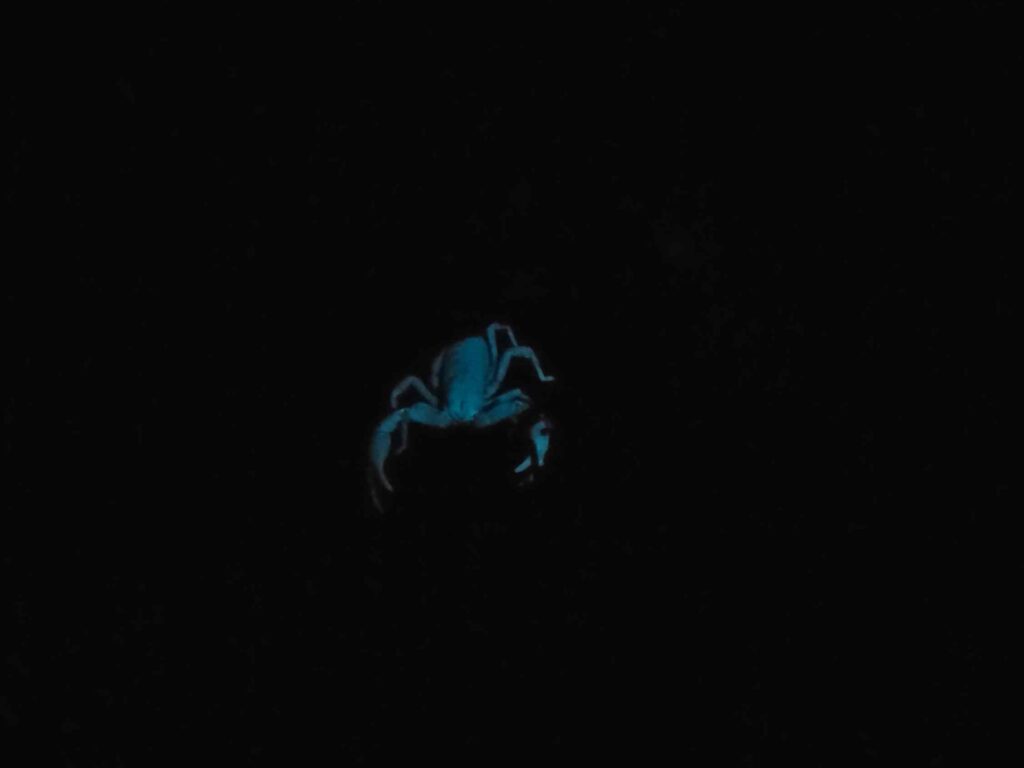
Turn off your headlamps and only rely on UV light; there you will find what we’re looking for – blue scorpions. In actuality, they aren’t actually blue in colour (they’re black/blackish brown!) but rather they glow blue when UV light is shone on them.
There, we saw two species of scorpions: Asian Forest Scorpion (Heterometrus spinifer) and Dwarf Wood Scorpion (Liocheles australasiae), both burrowing around and in the crevices and holes on the wall.
I hope this convinces you to try a night herp walk with Friends of Bukit Kiara – it’s some of the best outdoor experiences you can find in KL; one that opens many of our urban dwellers’ minds to how rich of a forest we have within our capital city.
Keep yourself up to date with their public walk calendar on Instagram and sign up upon their announcements of the walks (slots get taken up quickly).
Got an experience to share? Write to us at hello@mowgliventure.com !
Check out our other Travel Stories, Tips & Recommendations: