
by Louisa Ponnampalam on 8 September 2025
Alright alright, I’m finally leaving Malé city and headed out to another Maldivian island on another atoll. 🏝️
Atoll. The word always takes me back to my undergraduate days in Hawai’i. I took MARE 301 Atoll Ecology class in my sophomore year. It was the year 2001, that’s when I first learned the word “atoll”, and what it is. But I’d never been to an atoll, not until this trip to the Maldives, 24 years later.
The Maldives is basically made up of many atolls – bits of landmass that formed around the rims of volcanos and that got left behind as the volcanos sank into the ocean (over millions of geological years). Where the volcano used to be becomes the central lagoon, encircled by all the small islands and their reefs. 🌋
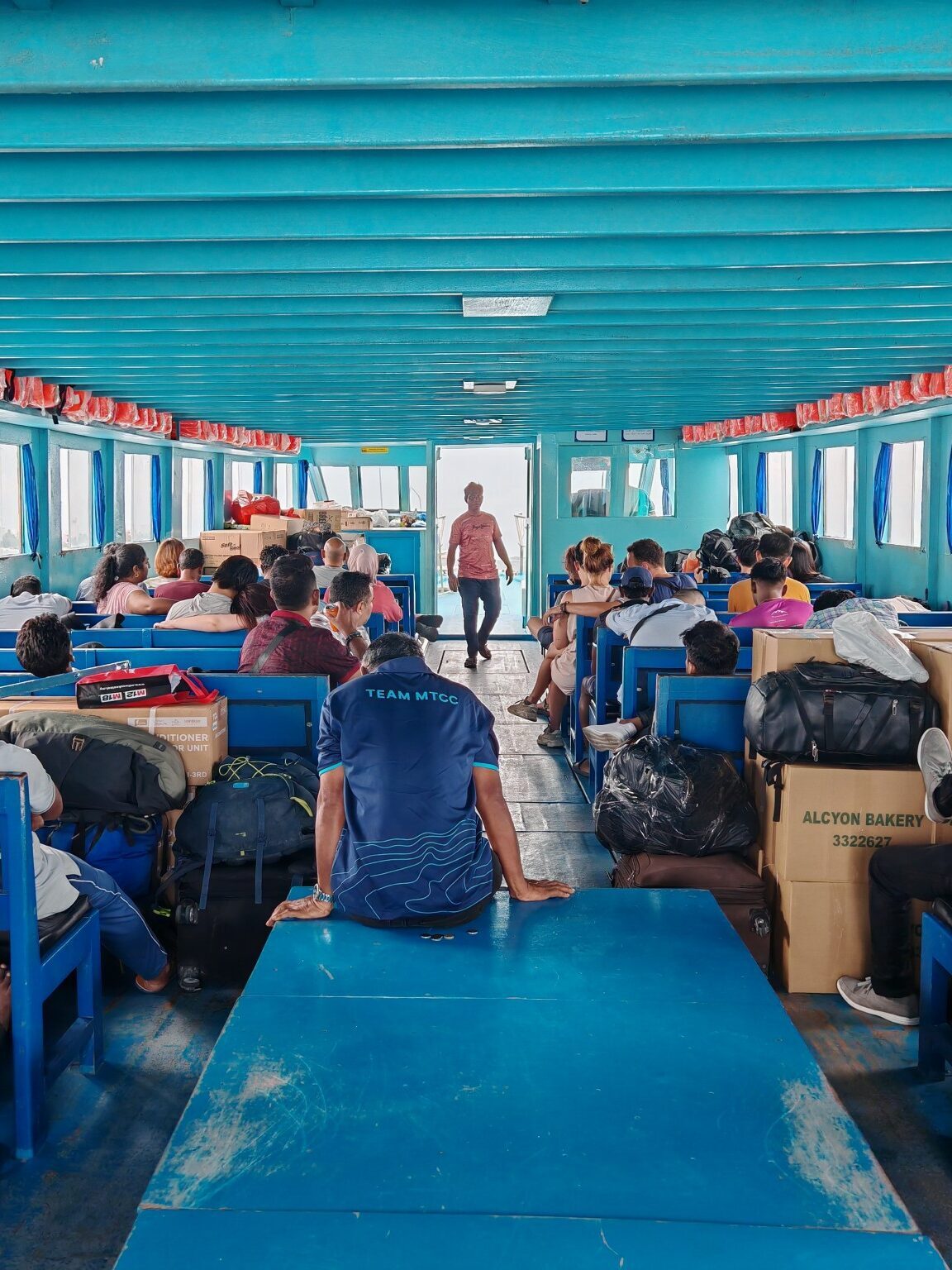
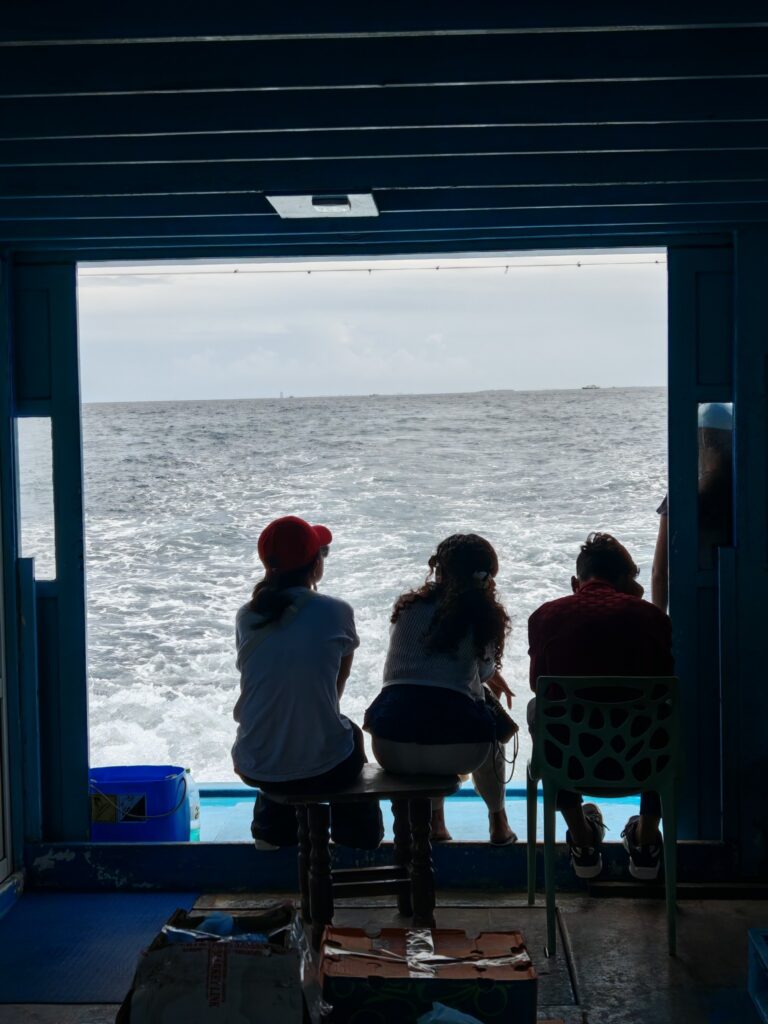
Ferry to Fulidhoo
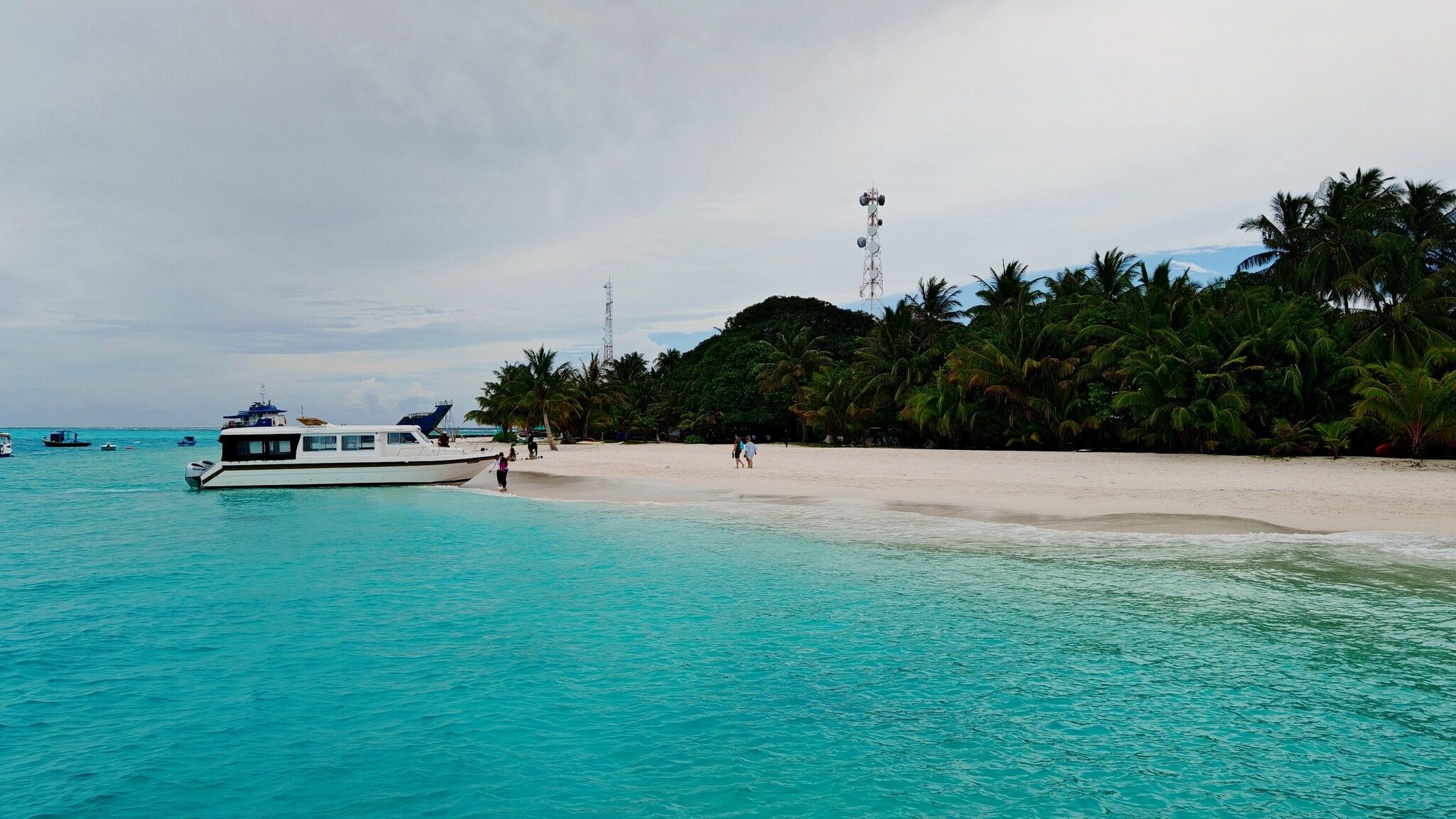
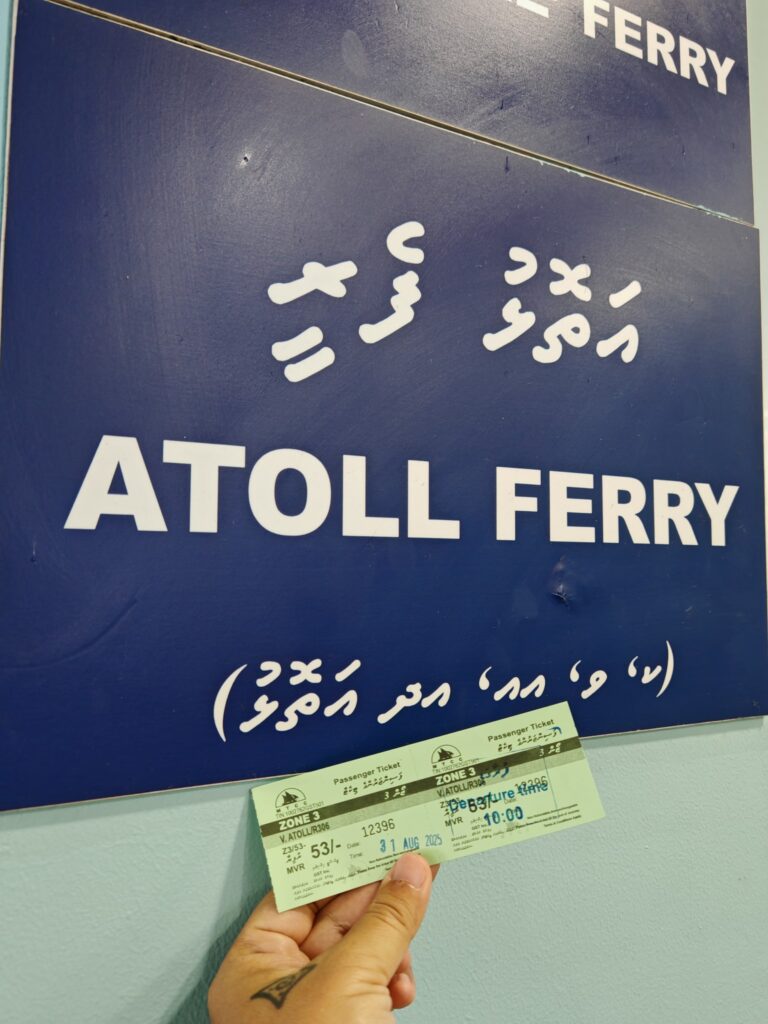
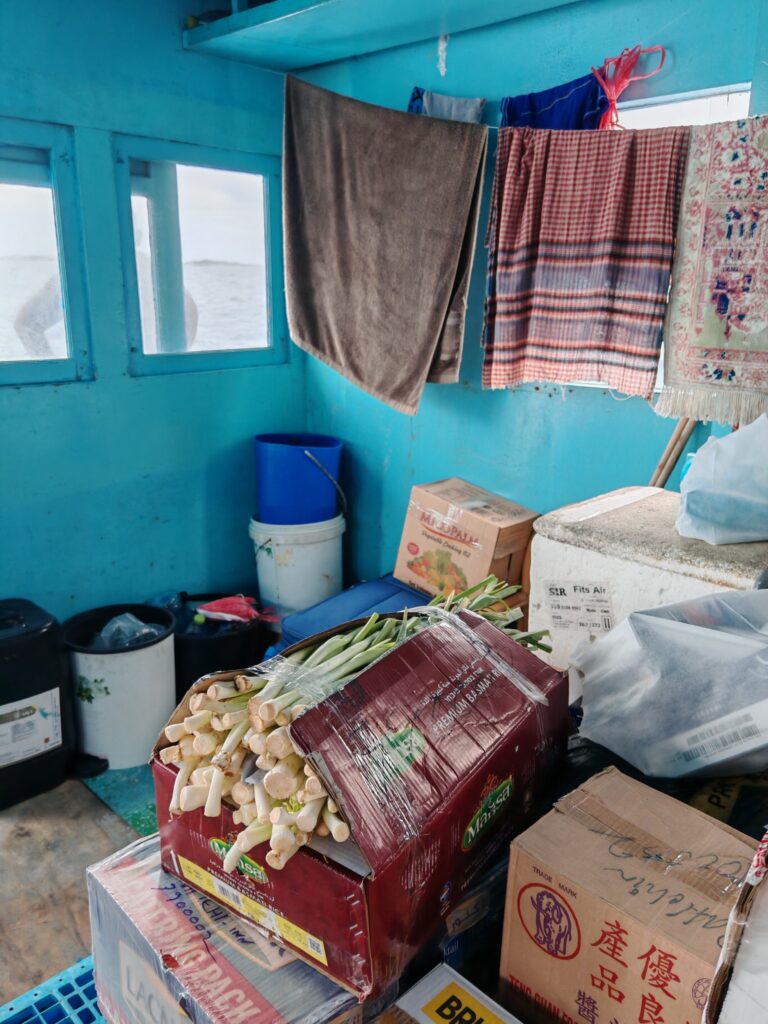
So our trip with Mowgli Venture was based on the island of Fulidhoo, on the northern end of Vaavu atoll. In this world’s lowest lying nation, there are “local islands” (inhabited by locals) and “private islands” (exclusive with some luxury resort). Fulidhoo is a local island, so small in size,one can walk around the whole sand mound in 30 mins or less. To get to Fulidhoo from Malé, we travelled the way the locals do – cheap and slow via the atoll ferry, which took us 3.5 hours to get to our next stop. A good experience to be tried at least once, and we got to see spinning spinner dolphins on the way 🛥️🐬
Arrival to Fulidhoo
With apparently only 50 years before the entire nation is submerged by sea level rise, and with tourism as their absolute main economic lifeline, Fulidhoo is booming… with development and gentrification. I expected more laidback village settings in Fulidhoo, but instead found myself in the midst of a myriad of construction work – new tourist inns and lodges on their way.

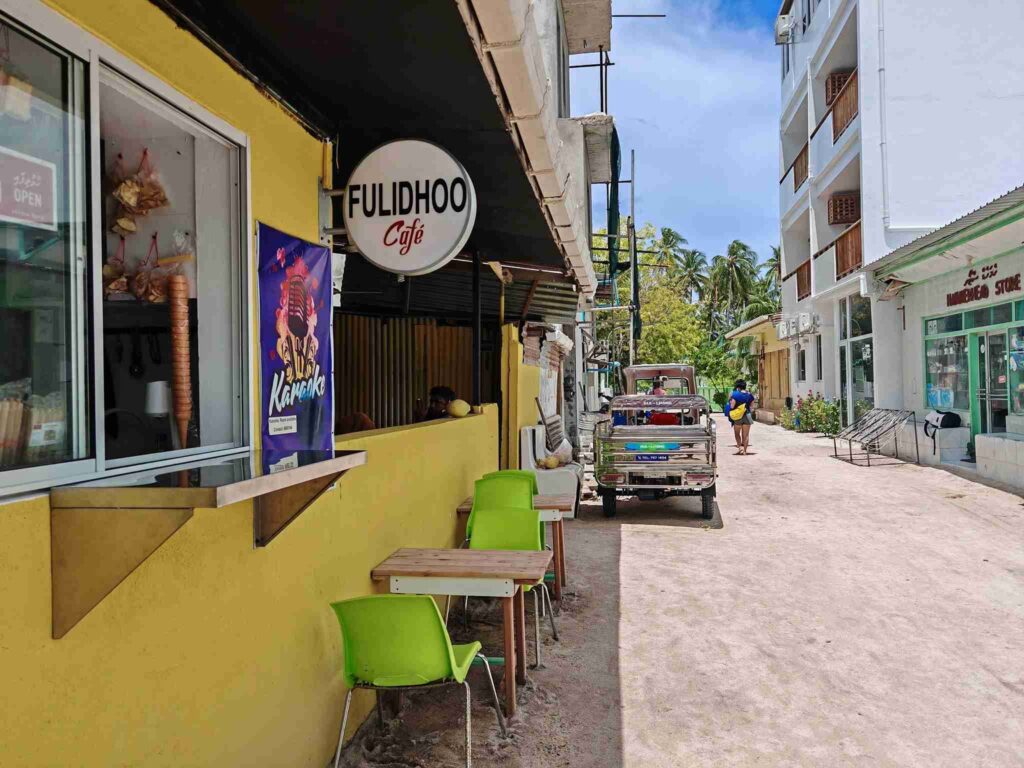
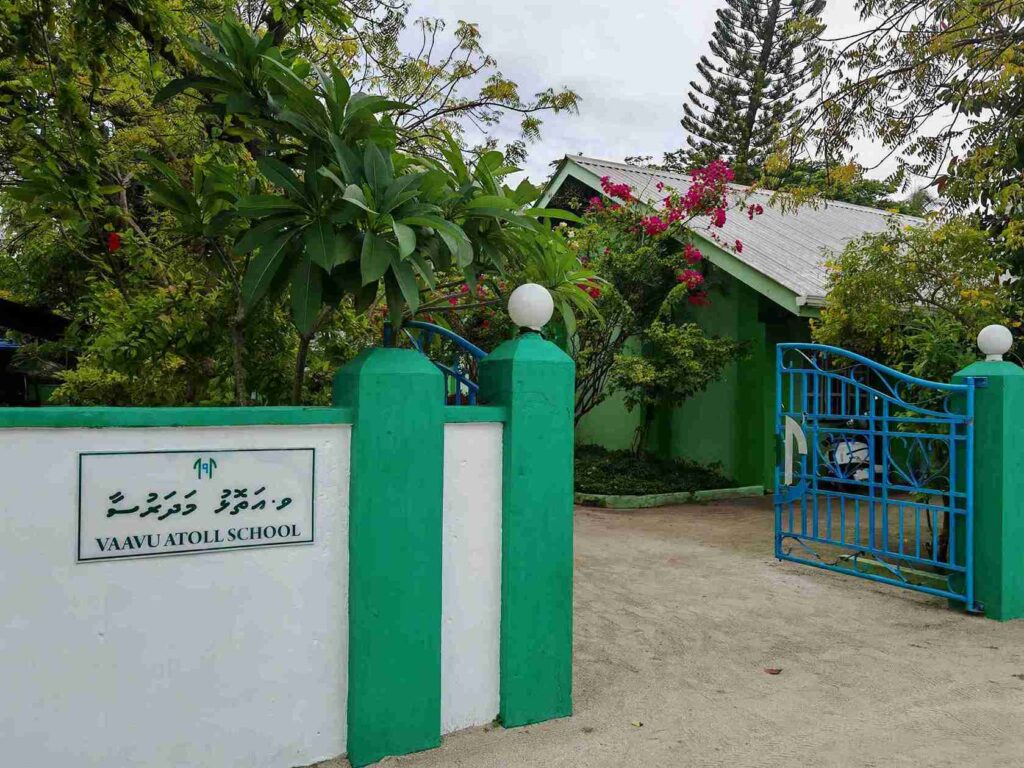
At most times, it was hard to identify which buildings were the locals’ homes, because so much seemed to be overshadowed or replaced by these tall new buildings. According to our guide, the increase in development has been exponential over a very short time frame. 👀
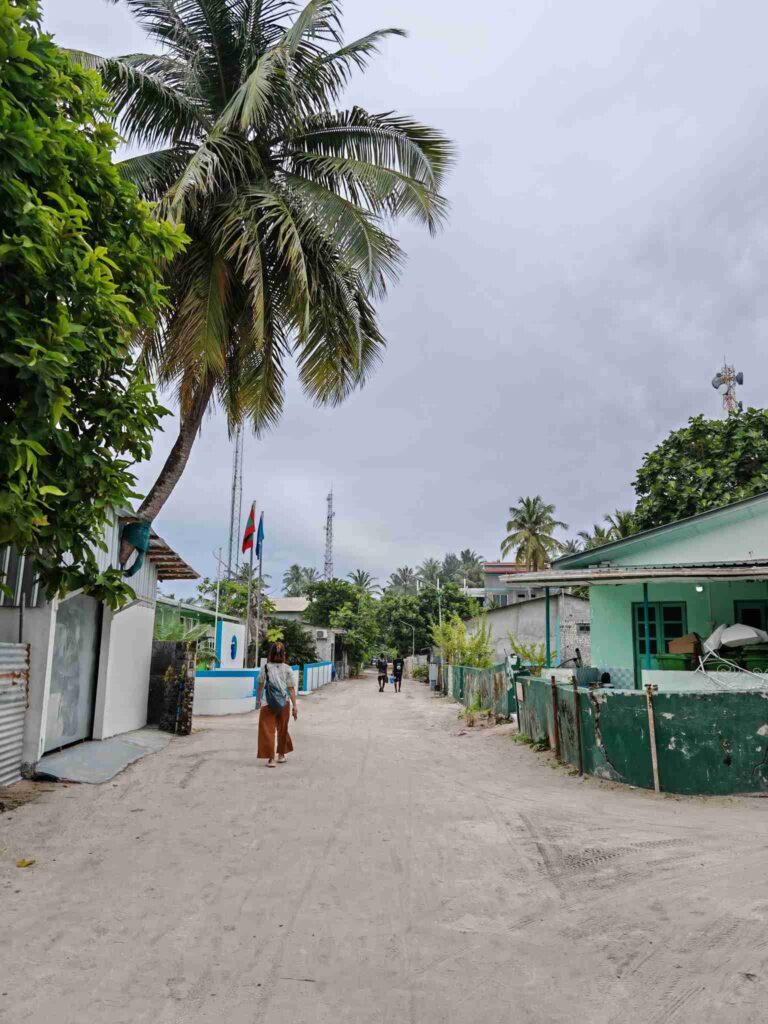
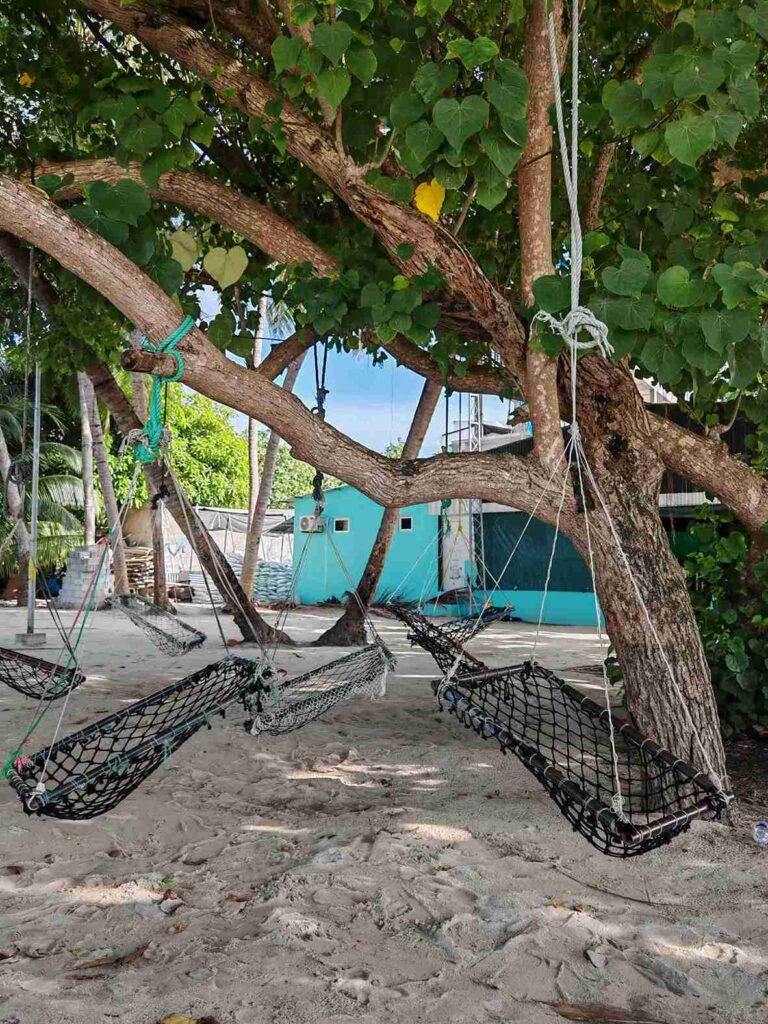
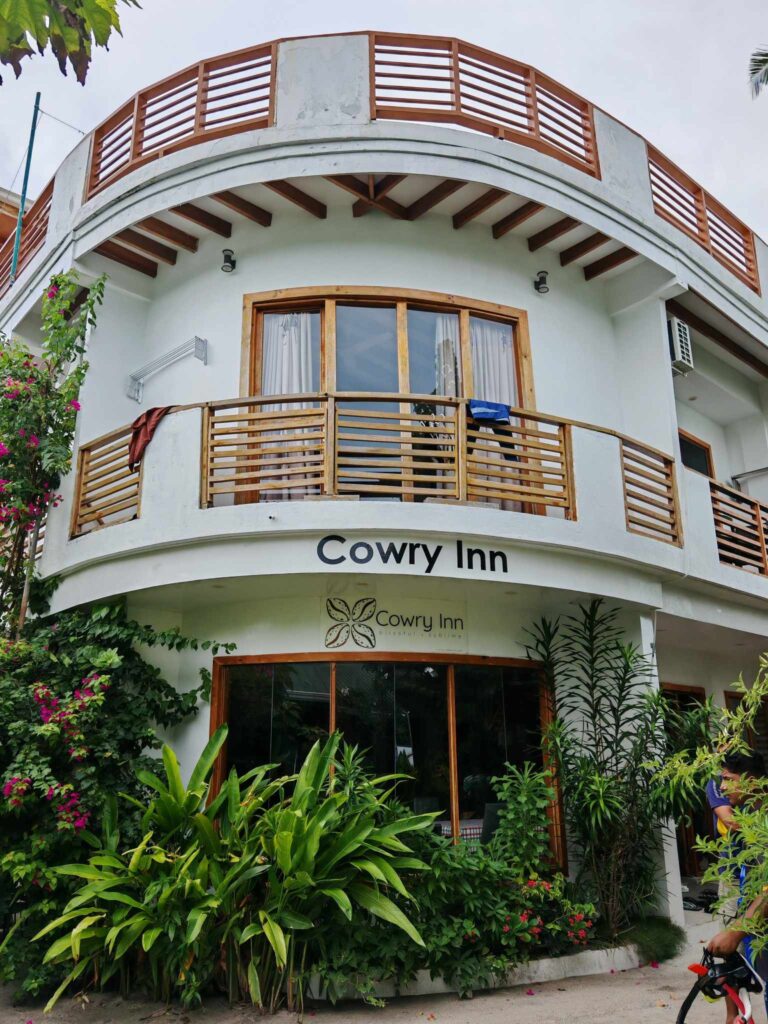
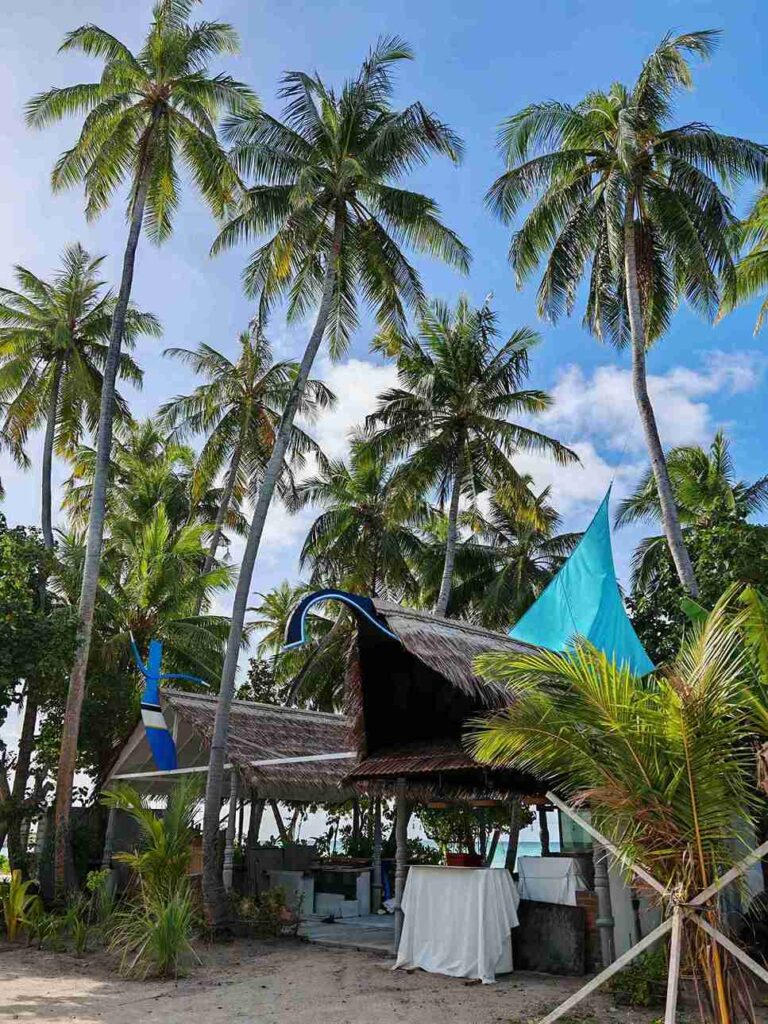
Entrances to the locals’ homes
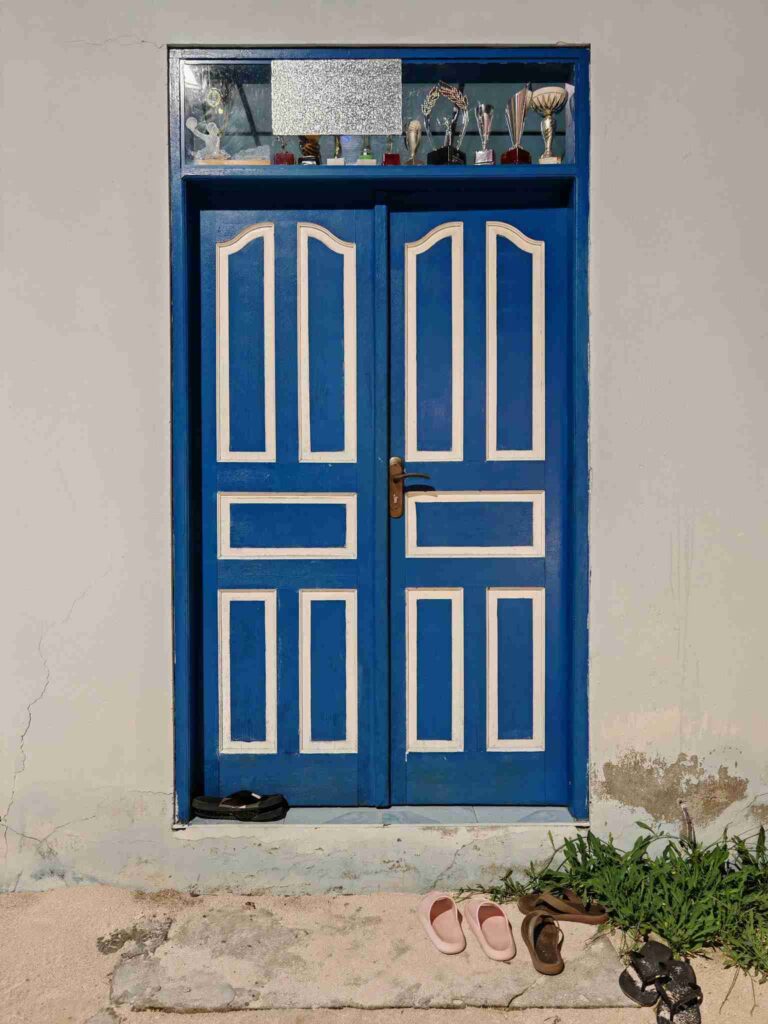
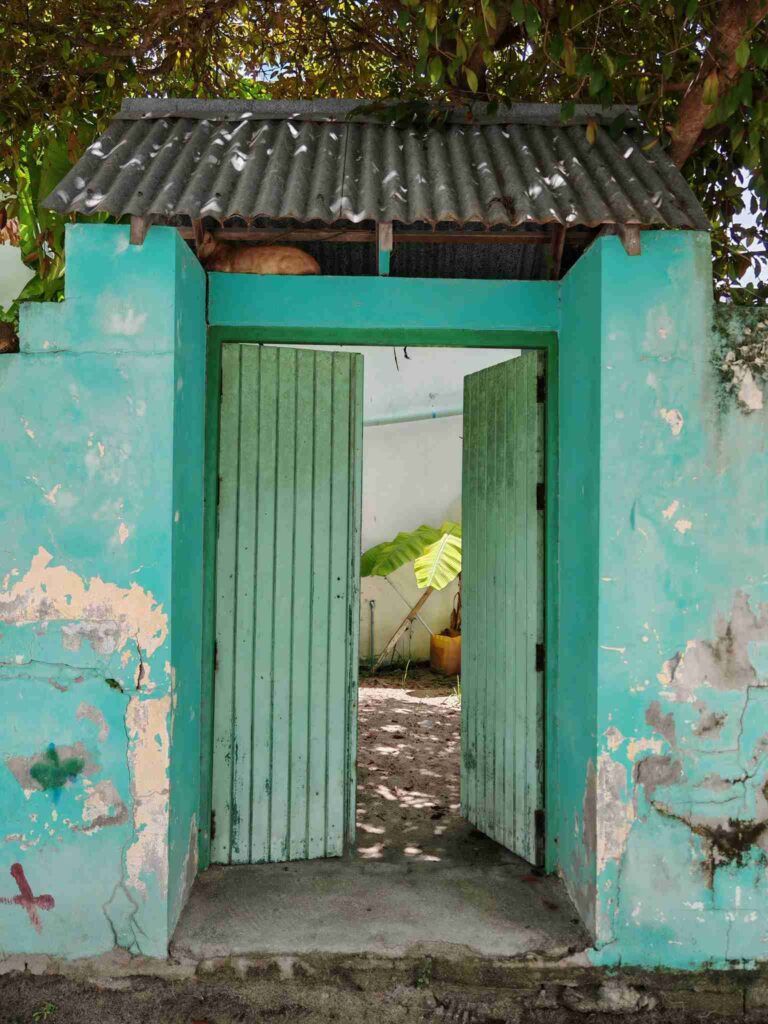
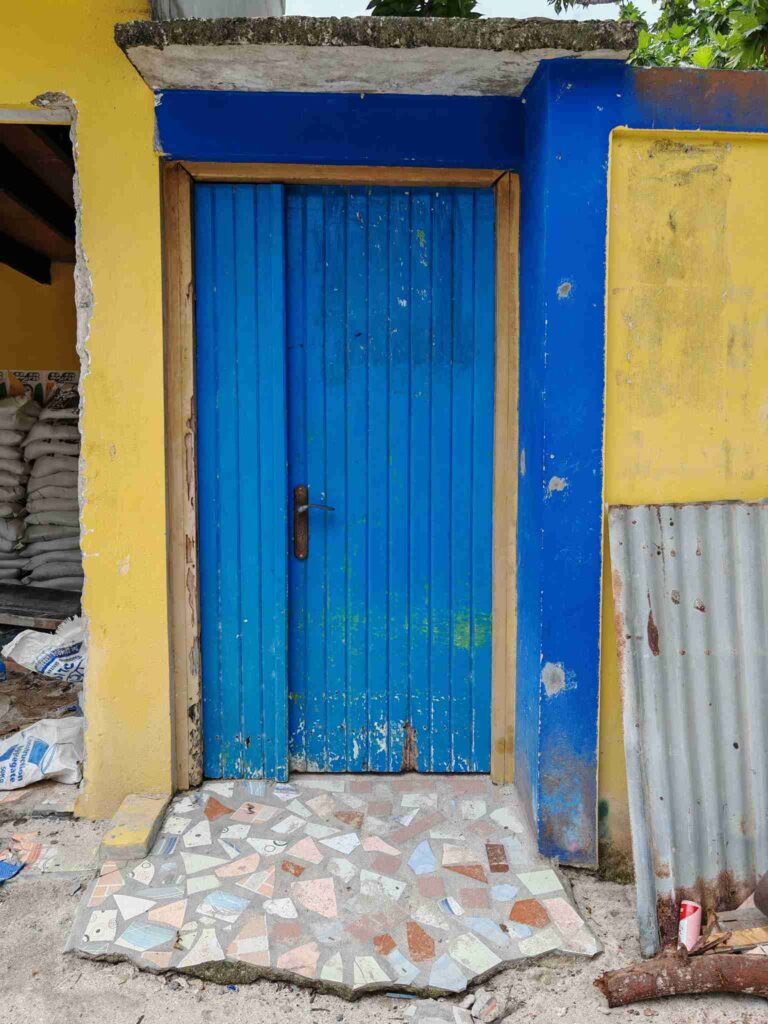
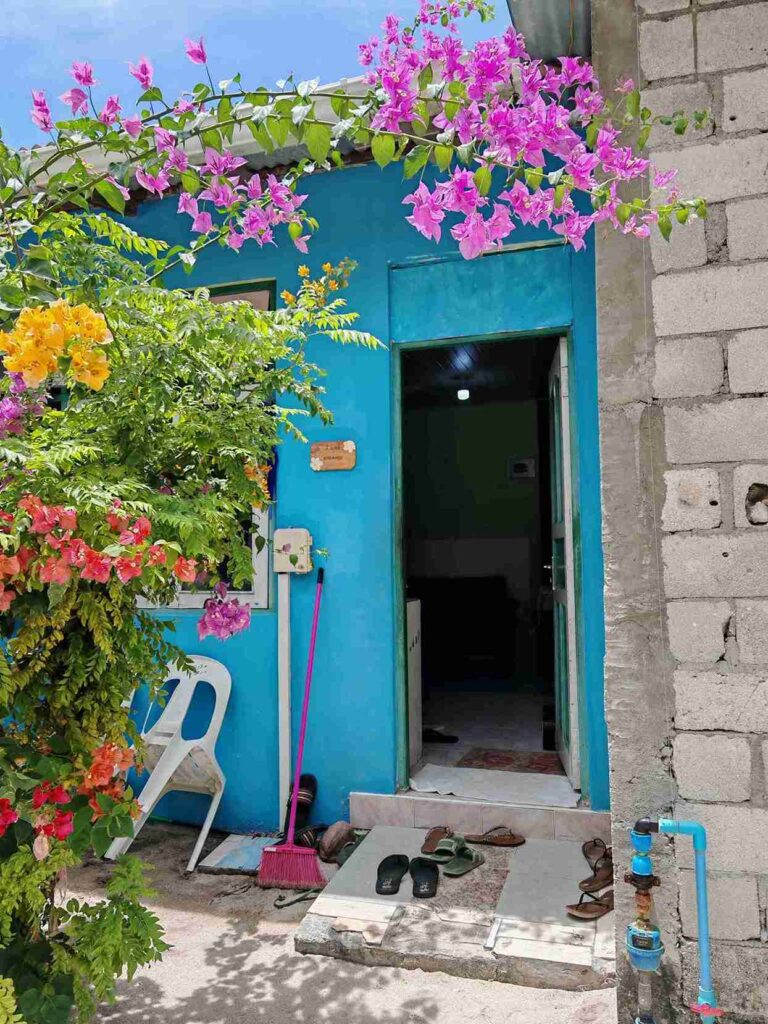
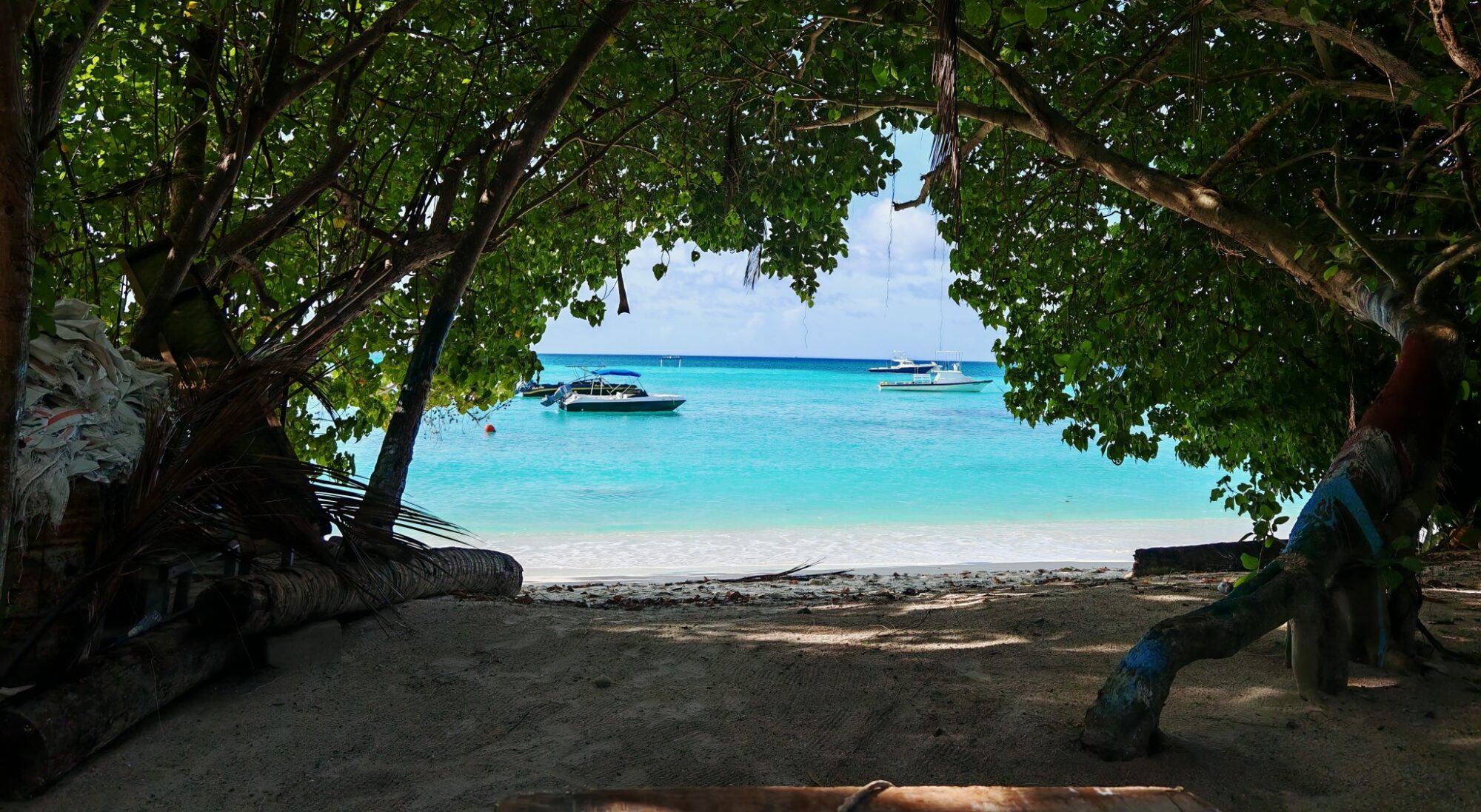
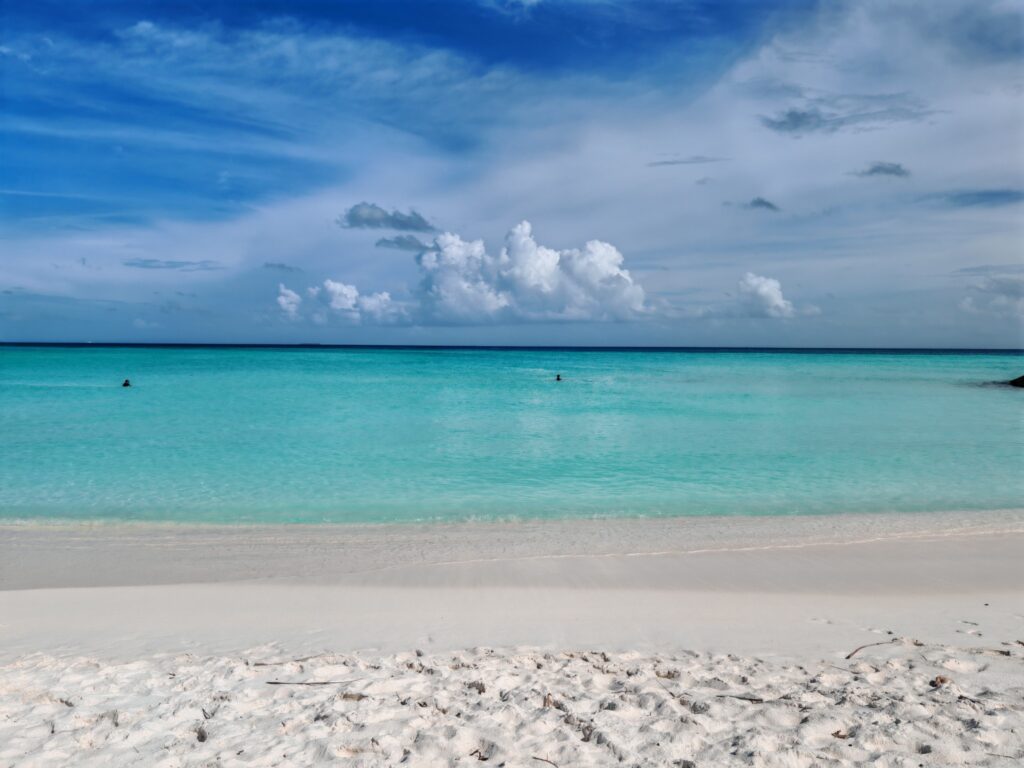
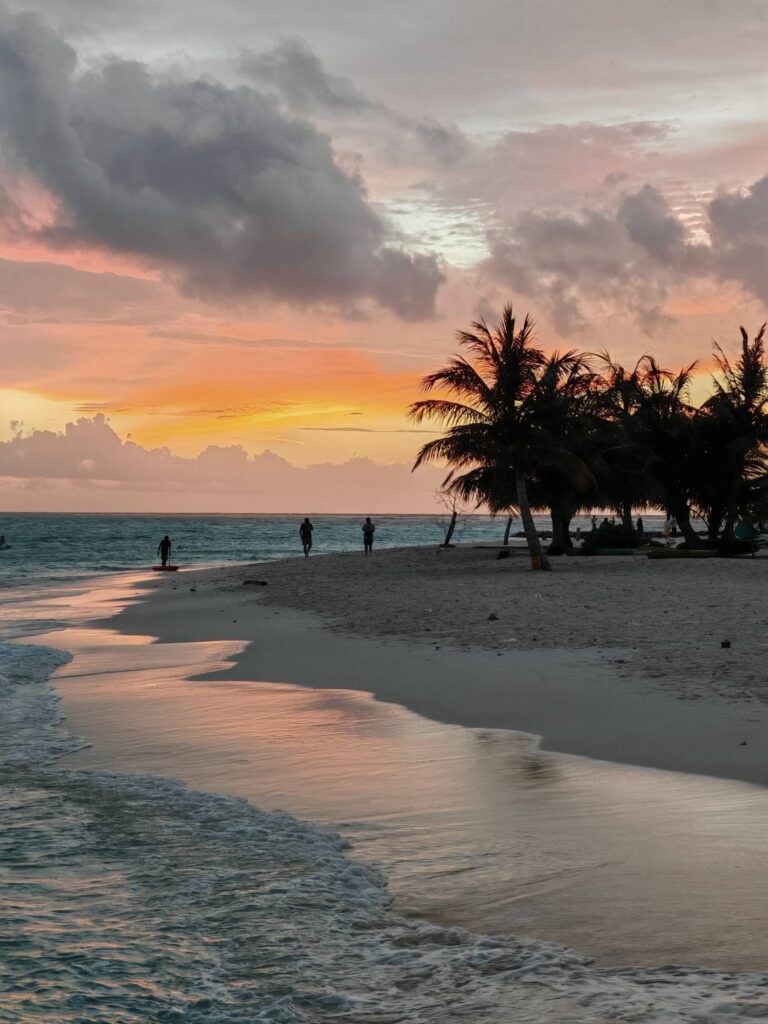
The powdery sandy shores and crystal blue waters of Fulidhoo are still very pretty, nonetheless, and her sunsets pack a real feast for the eyes. Stingrays and nurse sharks patrol the shoreline, and we were treated to a whole aggregation of baby black-tip reef sharks by the rocky seashore on our last day there. It was also nice seeing flying foxes fly about, and the makaana (Grey heron) was a regular seaside species. 🦇
🤿 A challenging morning swim past the ferocious wave breakers to the house reef was rewarded with a white tip reef shark patrolling the reef slope, and a sleeping nurse shark parked under a coral ledge. The reef is unfortunately largely dead, apparently due to a very bad storm sometime back, but at least there’s still a high diversity and biomass of reef fishes!
It was nice to see that despite tourism booming on Fulidhoo, the locals would still come out for a seaside stroll at sunset. I hope they never lose their sense of pride for their island home
Locals in Fulidhoo
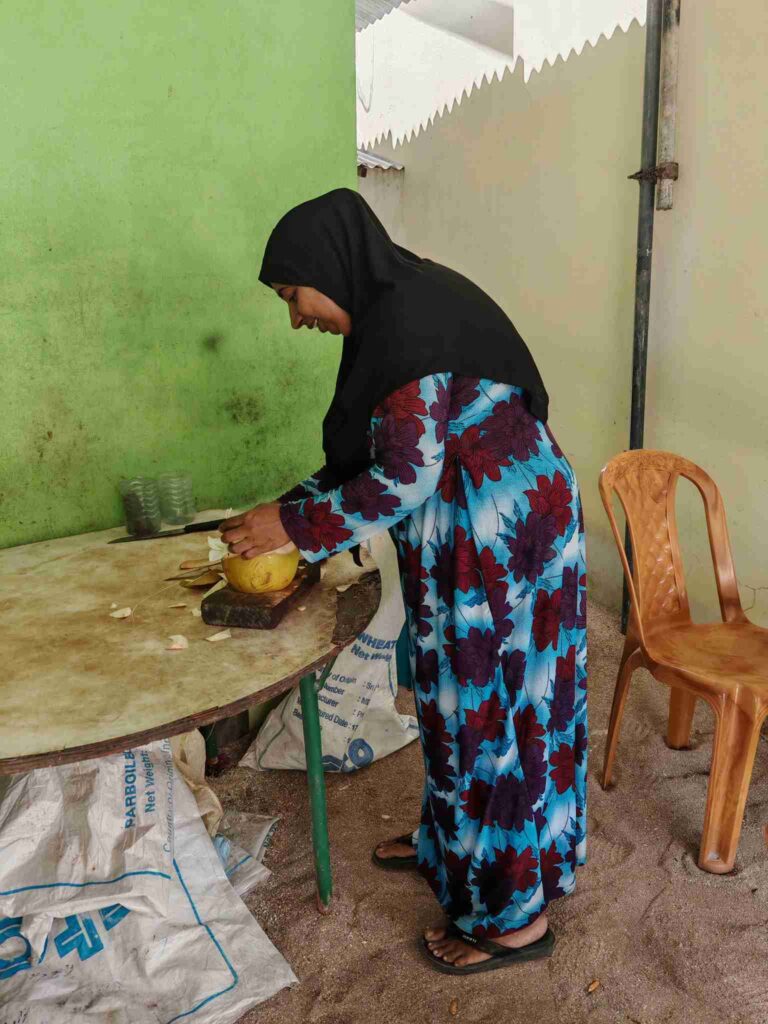
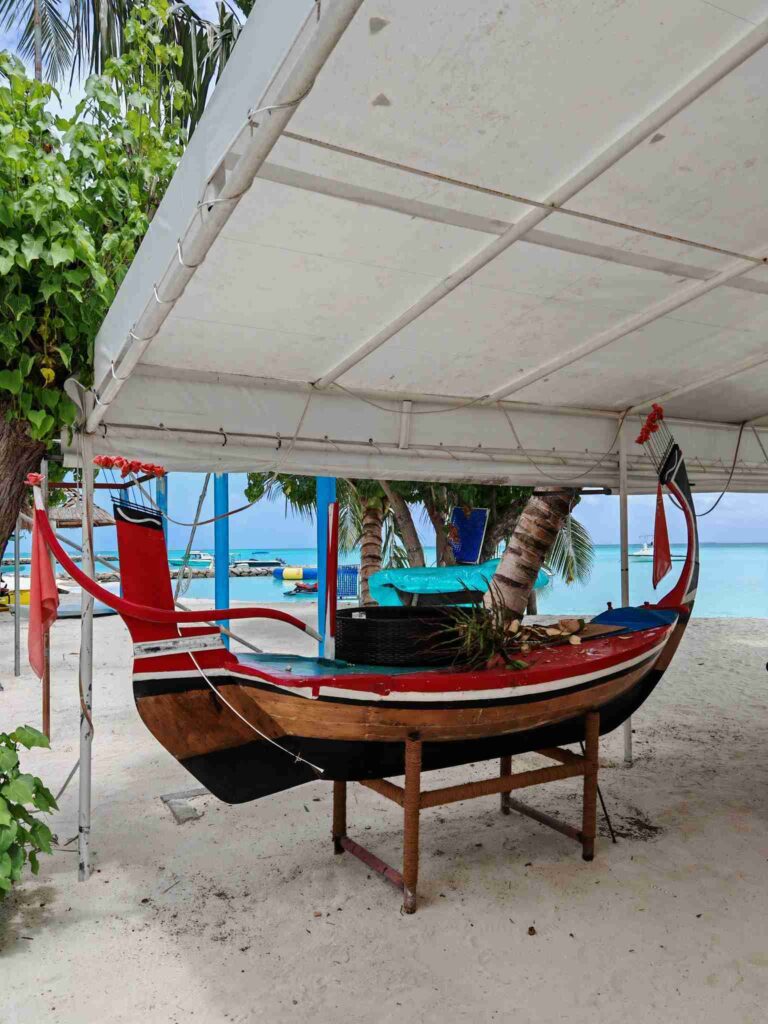
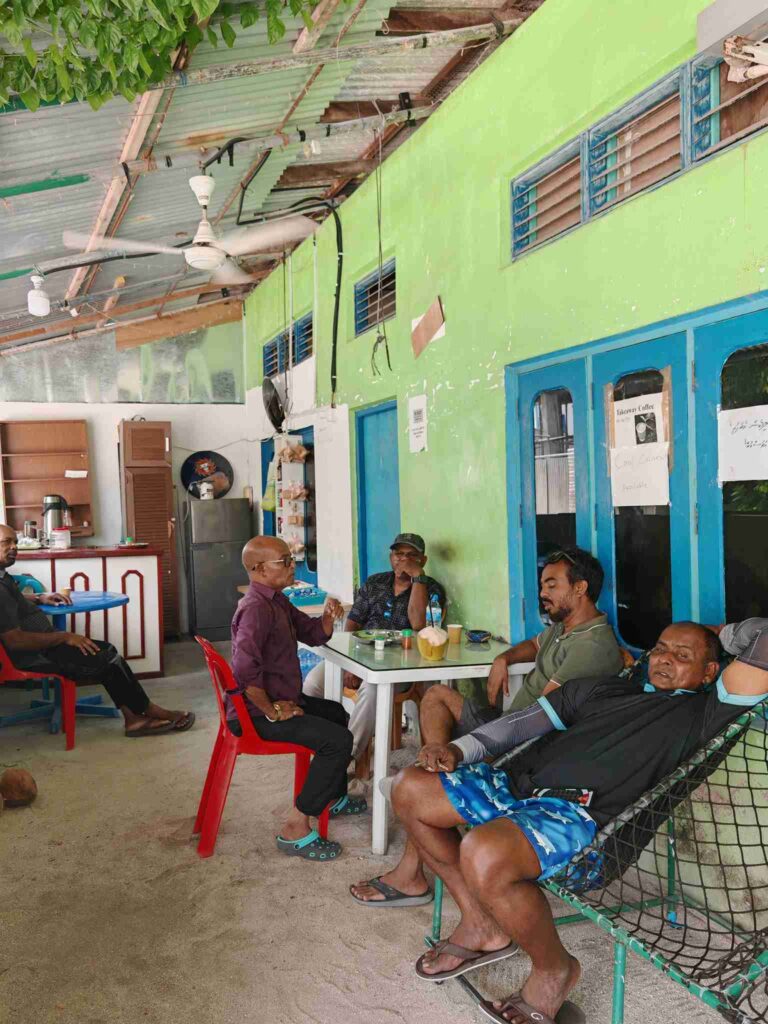
I hope to return to Fulidhoo another time during Eid, where they have a unique cultural way of celebrating, with masked dancers and other interesting traditions ✨
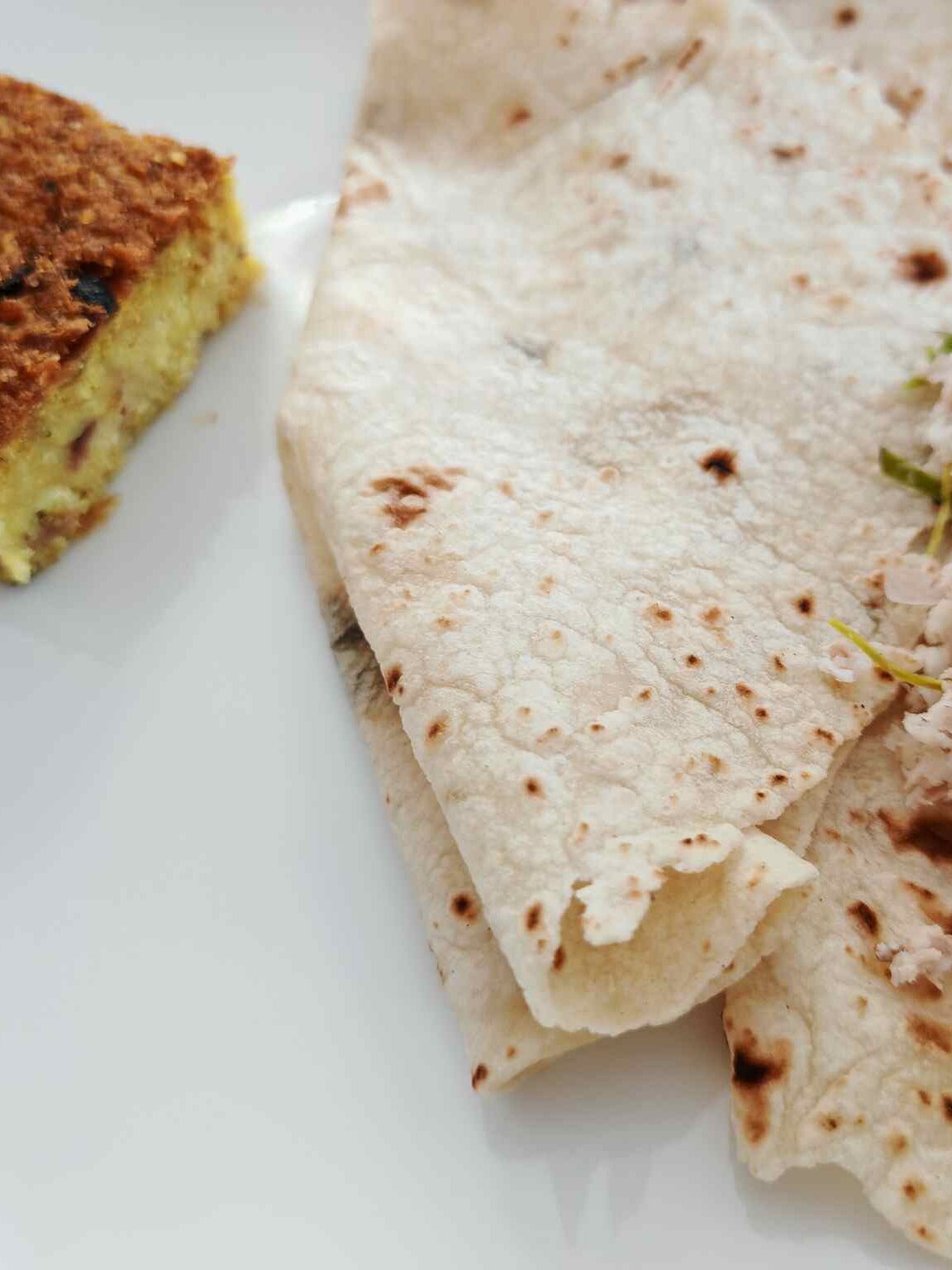
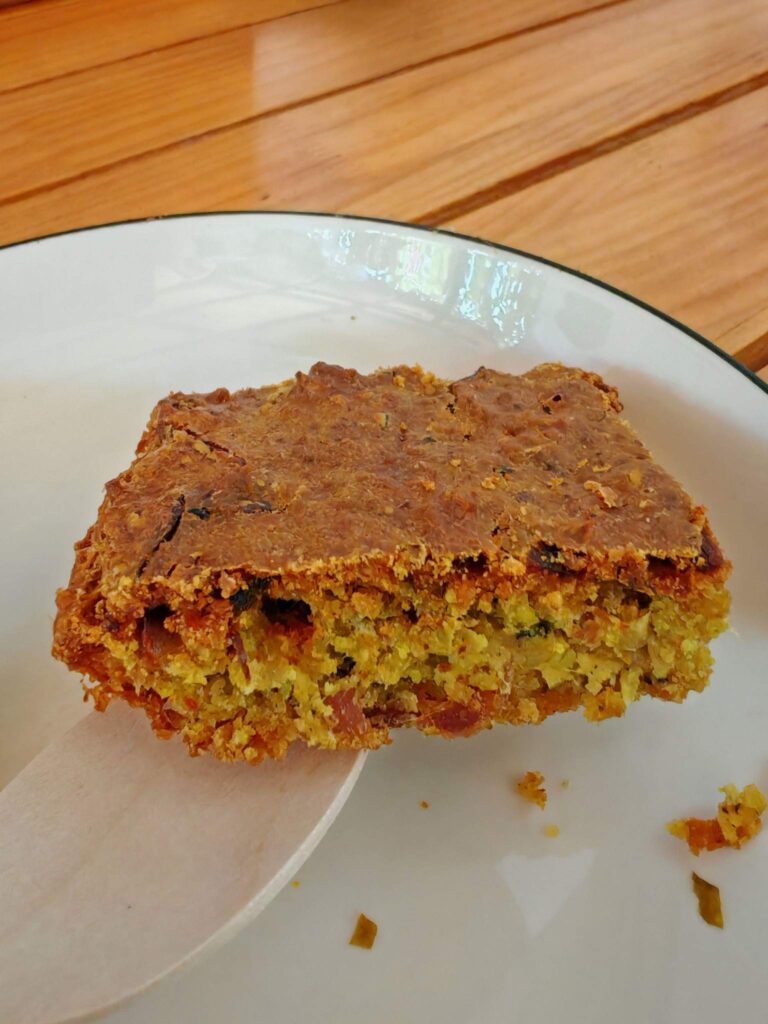
Following on from my earlier post about tuna and the Malé fish market, here’s a snapshot of all the tuna things I ate during daily breakfast or tea in the Maldives. I don’t eat fish on a normal day, and if I ate any at all, tuna isn’t particularly a favourite either. But just for those few days, I quite enjoyed the way the tuna was prepared in the classic Maldivian breakfast dishes – tuna mashuni and kulhimas. It was deliciously paired with roshi, which I’ll describe as having the thinness of a crepe, and taste and texture of a capati. I also enjoyed their masroshi and kulhi boakibaa. 🥙
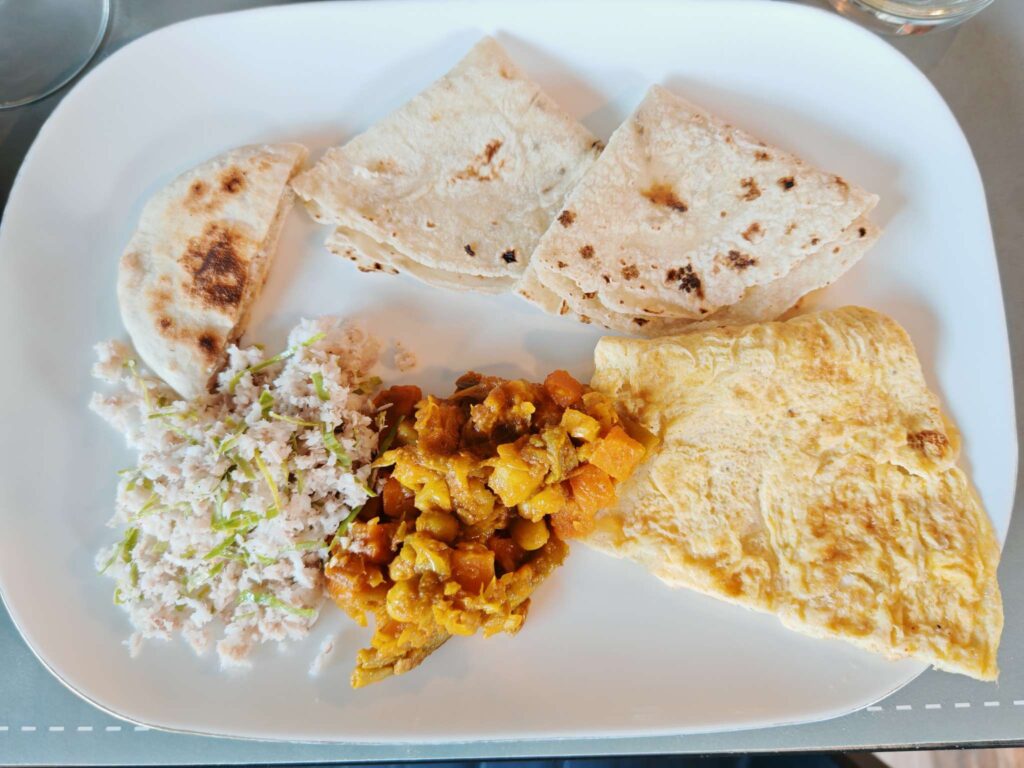
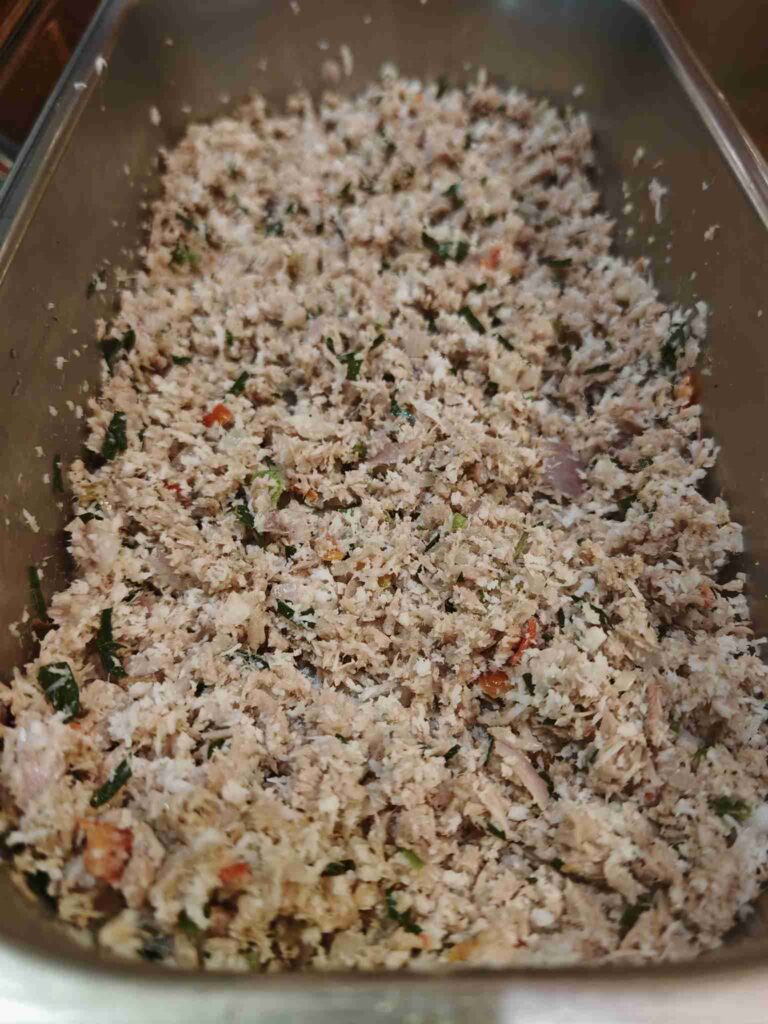
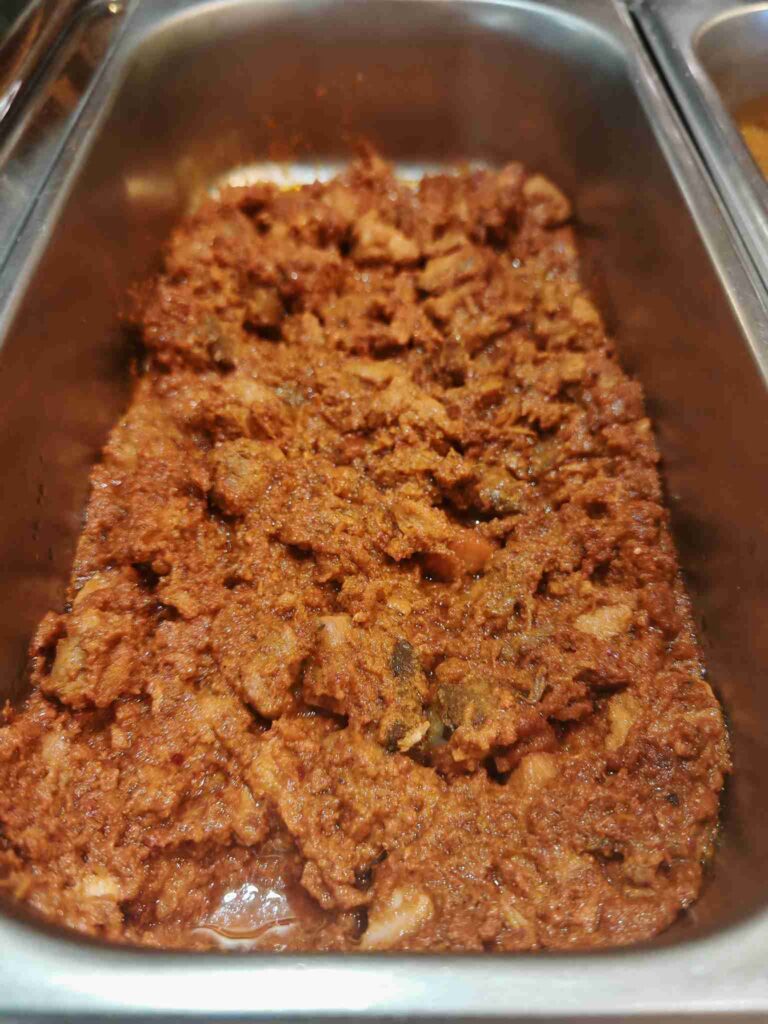
From left to right >>
Tuna mashuni – minced tuna mixed in with freshly grated coconut, lime juice, onion, chopped green chillies, and salt to taste
Kulhimas – a spicy and spiced tuna dish cooked with a blended paste of onions, curry leaves, hot peppers, garlic, ginger, grated coconut, cardamom, cumin, red chili powder, oil, salt, and black pepper
Masroshi – a small flatbread stuffed with tuna and coconut
Kulhi boakibaa – traditional Maldivian tuna cake, which is dry and crusty externally and a little crumbly on the inside, has a texture and spiced taste akin to vadai (but very slightly fishy)
Got an experience to share? Write to us at hello@mowgliventure.com !
Check out our other Travel Stories, Tips & Recommendations: